Product Description
Reference Standards &Impurity
AI Product Description
*The following content is generated by AI and is for reference only.
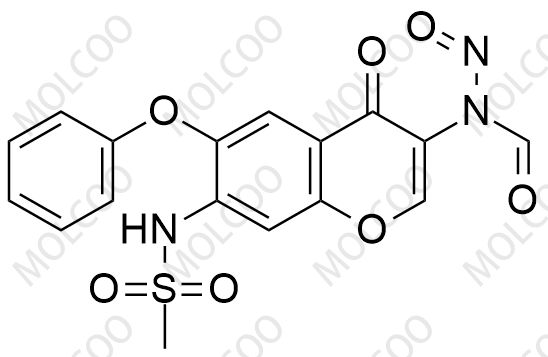
N-Nitroso compounds represent a significant class of organic chemicals characterized by the presence of the nitroso functional group (–N=O) attached to a nitrogen atom. While there is no single product named simply "N-NITROSO," this term refers to a broad family of chemical structures including N-nitrosamines and N-nitrosamides, which are widely studied in toxicology and industrial chemistry. The molecular formula varies depending on the specific derivative; for instance, N-nitrosodimethylamine (NDMA), one of the most common representatives, has the formula C2H6N2O and carries CAS number 62-75-9. These compounds are typically formed through the reaction of secondary amines with nitrous acid or nitrite salts under acidic conditions.
Historically, N-nitroso compounds have found applications in various industrial sectors, including the synthesis of dyes, rubber accelerators, and pharmaceutical intermediates. They serve as valuable reagents in organic synthesis for introducing nitroso groups into complex molecules. However, their utility is heavily overshadowed by severe health concerns. Extensive research has established that many N-nitroso compounds are potent carcinogens and mutagens. Upon exposure, they can undergo metabolic activation to form alkylating agents that damage DNA, leading to cancer development in various organs, particularly the liver and esophagus. Consequently, regulatory agencies worldwide impose strict limits on their presence in drinking water, food products, cosmetics, and medical devices.
Due to these risks, modern usage has significantly declined, with industries striving to eliminate precursors like nitrites and amines from production processes. In laboratory settings, handling requires rigorous safety protocols, including the use of fume hoods and personal protective equipment. Current scientific efforts focus on developing safer alternatives and understanding degradation pathways to mitigate environmental persistence. Despite their historical importance in chemical manufacturing, the legacy of N-nitroso compounds serves as a critical reminder of the necessity for thorough toxicity screening before commercializing new chemical entities. Their story underscores the delicate balance between industrial innovation and public health safety in the chemical industry today.






 (All Rights Reserved)