*The following content is generated by AI and is for reference only.
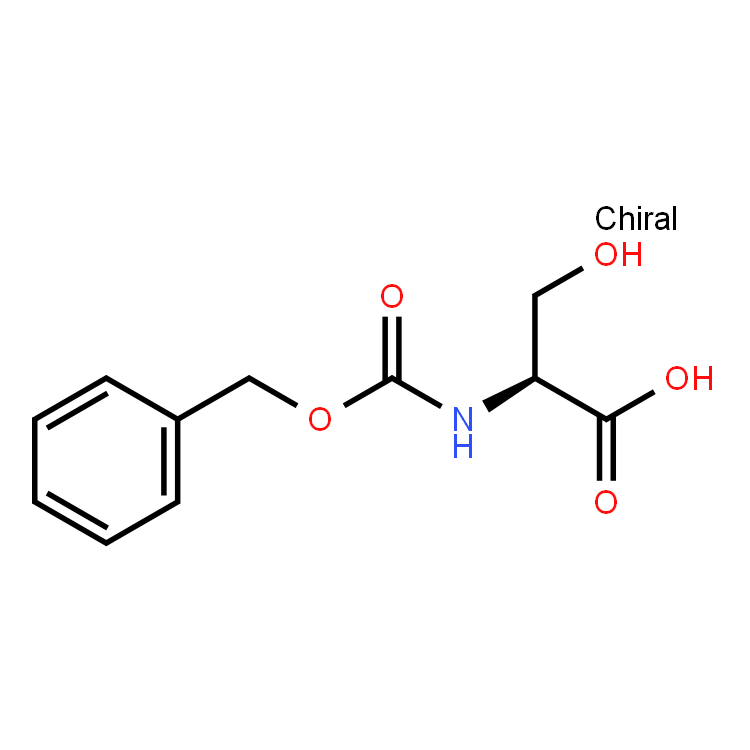
N-Carbobenzyloxy-L-serine, also known as Z-L-Serine or N-Z-L-Serine, is a vital protected amino acid derivative widely utilized in the field of organic synthesis and peptide chemistry. With the chemical formula C12H15NO5 and the CAS Registry Number 3479-06-7, this compound serves as a crucial building block for the preparation of complex peptides and bioactive molecules. The molecule consists of an L-serine backbone where the alpha-amino group is protected by a benzyloxycarbonyl (Cbz or Z) group. This protection strategy is essential during solid-phase peptide synthesis (SPPS) and solution-phase coupling reactions to prevent unwanted side reactions at the amine site while allowing other functional groups to react selectively.
The primary application of N-Carbobenzyloxy-L-serine lies in the construction of serine-containing peptides. Serine residues play significant roles in enzymatic active sites, protein phosphorylation, and structural stability within biological systems. By employing the Cbz protecting group, chemists can ensure high fidelity in sequence assembly, subsequently removing the group under mild acidic conditions using hydrogenation or strong acids like trifluoroacetic acid when necessary. Beyond standard peptide synthesis, this reagent is frequently used in the development of pharmaceutical intermediates, including antibiotics and antiviral agents that rely on specific serine motifs. Its chiral purity is strictly maintained to ensure the biological activity of the final products, making it a preferred choice for researchers requiring stereochemical accuracy. Furthermore, its solubility characteristics allow for versatile use across various organic solvents, facilitating efficient reaction kinetics. As a stable solid at room temperature, it offers ease of handling and storage for laboratory-scale and industrial applications alike. Overall, N-Carbobenzyloxy-L-serine remains an indispensable tool in modern medicinal chemistry and biochemical research, enabling the precise manipulation of molecular architectures required for drug discovery and protein engineering advancements.