Product Description
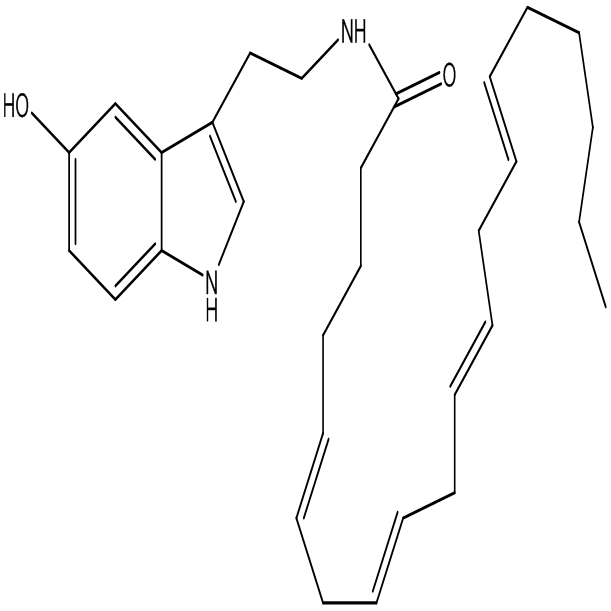
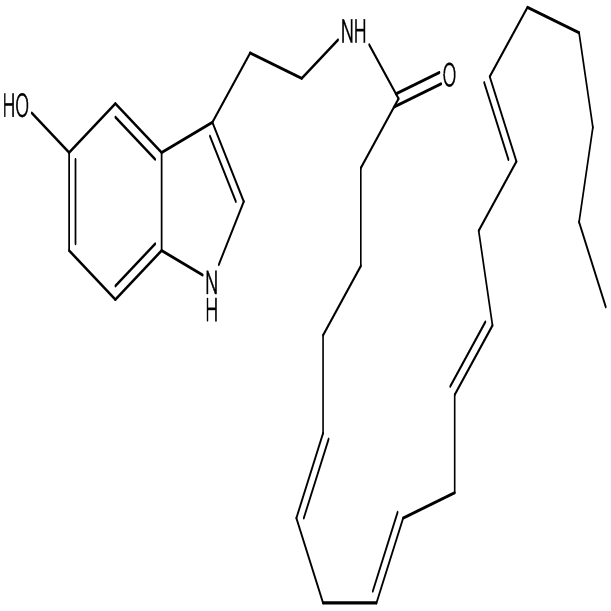
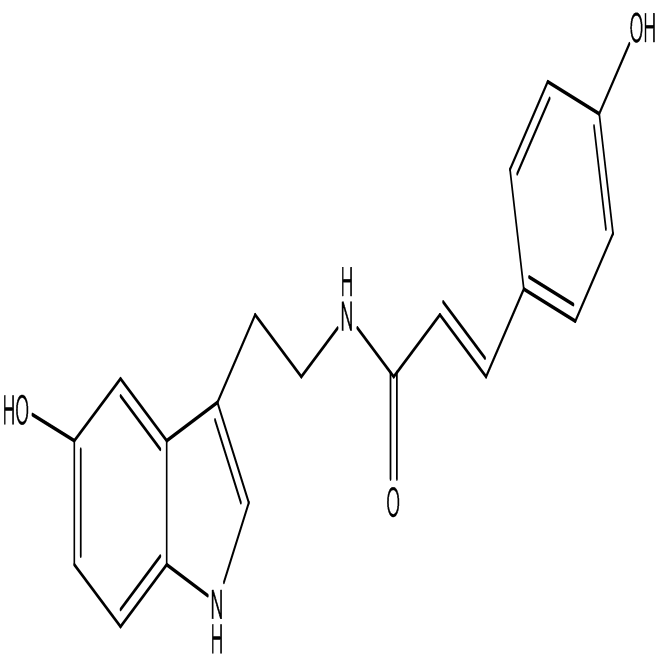
N-Arachidonoyl serotonin
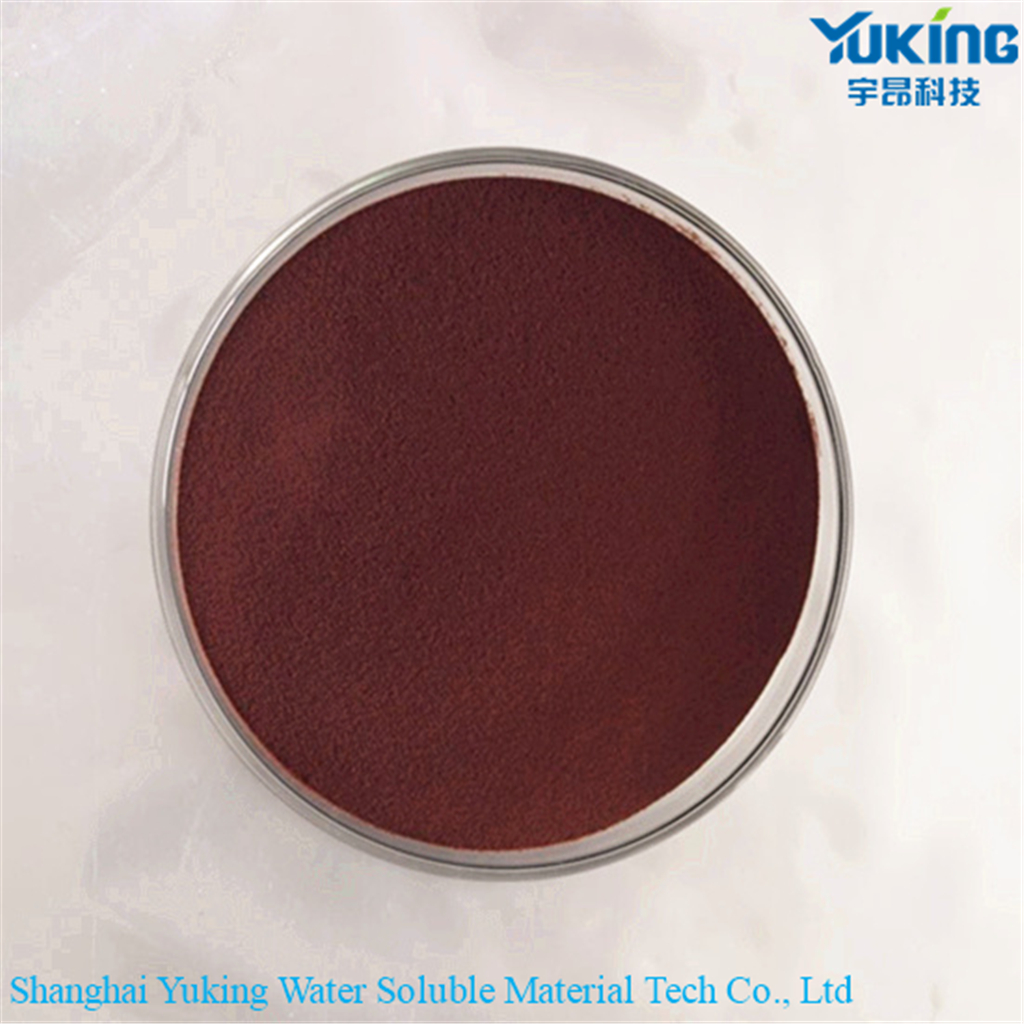
Type : griffonia seed extract
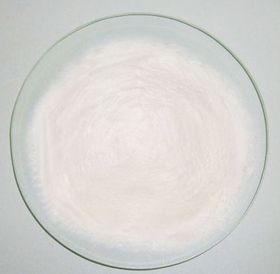
Appearance :powder
Part : seed
Extraction Method : Solvent Extraction
Packing : bottle , drum , vacuum packed
Grade :medicine grade
Molecular formula : N30H42N2O2
Function :
1. Inhibitors of fatty acid amide hydrolase (FAAH).
2. It has analgesic effect on rodents.
Contact :
Trading manger : Helen Tan
Whatsapp : +86 13930229229
Website : www.blrhbio.com
AI Product Description
*The following content is generated by AI and is for reference only.
N-Arachidonoyl serotonin, chemically designated as AA-5-HT and identified by CAS Registry Number 187947-37-1, is a sophisticated bioactive lipid mediator belonging to the class of N-acylethanolamines. Its molecular structure consists of an arachidonic acid moiety esterified to the hydroxyl group of serotonin, creating a unique hybrid molecule that bridges serotonergic signaling with endocannabinoid-like pathways. The molecular formula for this compound is C26H35NO2, reflecting its complex composition derived from fatty acids and neurotransmitters.
In the realm of biomedical research, AA-5-HT serves as a critical tool for investigating the intricate crosstalk between the central nervous system and peripheral tissues. Unlike classical endocannabinoids such as anandamide, AA-5-HT exhibits distinct pharmacological profiles, acting as a potent agonist at specific serotonin receptors while simultaneously modulating cannabinoid receptor activity. This dual mechanism makes it invaluable for studying neuroprotection, inflammation regulation, and pain perception mechanisms. Researchers utilize this compound to explore its role in gastrointestinal motility, vascular tone, and immune response modulation, offering insights into potential therapeutic targets for disorders involving chronic pain or inflammatory diseases.
The synthesis of AA-5-HT typically involves the enzymatic or chemical coupling of arachidonic acid and serotonin under controlled conditions to ensure high purity and stereochemical integrity. As a research reagent, it is primarily used in vitro and in vivo studies within academic laboratories and pharmaceutical development pipelines. It is not currently approved for clinical use in humans but remains a subject of intense investigation due to its potential to influence metabolic homeostasis and neuronal plasticity. Scientists are particularly interested in how AA-5-HT interacts with transient receptor potential channels and other non-cannabinoid receptors to elicit physiological effects.
Despite its promising biological activities, handling AA-5-HT requires strict adherence to safety protocols, as with many bioactive lipids. Proper storage at low temperatures is essential to maintain stability and prevent degradation. While commercial availability is limited compared to standard metabolites, specialized chemical suppliers provide high-quality samples for qualified researchers. Continued study of this molecule may unlock new strategies for treating neurological and inflammatory conditions, highlighting its significance in modern pharmacology and neuroscience.


![benzyl-N-[2-(5-hydroxy-1H-indol-3-yl)]carbamate,CAS:53157-50-10](https://eimg.pharmasources.com/image/product/20200619/d2cc2c1ed1aacb4b50276ca2a7970df2jpg)




 (All Rights Reserved)