Product Description
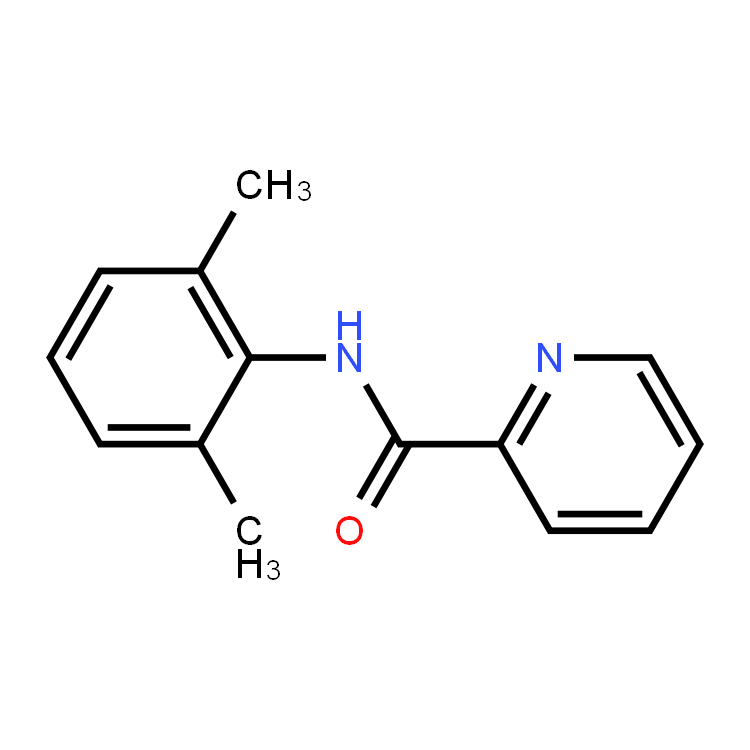
N-(2,6-Dimethylphenyl)picolinamide、39627-98-0
AI Product Description
*The following content is generated by AI and is for reference only.
N-(2,6-Dimethylphenyl)picolinamide is a specialized organic compound widely utilized in the fields of medicinal chemistry and materials science. With the chemical formula C15H15NO2 and the CAS Registry Number 13874-56-9, this molecule features a unique structural architecture combining a picolinic acid moiety with a sterically hindered 2,6-dimethylaniline group. The presence of methyl groups at the ortho positions of the phenyl ring significantly influences its conformational flexibility and electronic properties, often leading to distinct binding affinities when interacting with biological targets or metal centers.
In pharmaceutical research, this amide derivative serves as a crucial intermediate for synthesizing complex heterocyclic scaffolds, particularly those containing quinoline or isoquinoline cores. These structures are frequently investigated for their potential therapeutic applications, including anti-inflammatory, antimicrobial, and anticancer activities. The steric bulk provided by the dimethyl substituents can enhance metabolic stability and improve pharmacokinetic profiles by reducing susceptibility to enzymatic degradation. Furthermore, the molecule acts as an effective ligand in coordination chemistry, capable of forming stable complexes with transition metals such as palladium, copper, and ruthenium. These metal-ligand complexes find extensive use in catalytic processes, facilitating cross-coupling reactions and other organic transformations with high selectivity and efficiency.
Beyond its role in drug discovery and catalysis, N-(2,6-Dimethylphenyl)picolinamide is also explored in the development of functional materials. Its rigid yet tunable structure makes it suitable for designing luminescent probes or sensors that respond to specific environmental stimuli. Researchers appreciate its solubility characteristics in common organic solvents, which simplifies purification and formulation processes during laboratory-scale synthesis. As demand grows for novel bioactive agents and efficient catalysts, this compound remains a valuable building block in synthetic laboratories worldwide. Continuous studies aim to unlock new applications by modifying its core structure while retaining the advantageous properties conferred by the 2,6-dimethyl substitution pattern. Overall, it represents a versatile tool for advancing both fundamental chemical research and practical industrial applications.











 (All Rights Reserved)
![8-Oxa-1,3-diazaspiro[4.5]decane-2,4-dione](https://eimg.pharmasources.com/image/product/20250403/60fa7223d5a34f24138486ceea0ffb15jpg)
![6,8-Dioxo-5,7-diazaspiro[3.4]octane-2-carboxylic acid](https://eimg.pharmasources.com/image/product/20250403/02effeb5a7639bc84ff1f3add3c0c64fjpg)
![8,16-Diazadispiro[6.1.6.2]heptadecan-17-one](https://eimg.pharmasources.com/image/product/20250403/ca91cba8b87e53fc879f8d8764873a40jpg)