DMG-PEG 2000 is used in the preparation of liposomes for siRNA delivery, which can improve the transfection efficiency. It can also be used in the preparation of lipid nanoparticles for the in - vivo delivery of oral plasmid DNA. DMG-PEG 2000 can enhance the mucus permeability and delivery efficiency of nanoparticles.
*The following content is generated by AI and is for reference only.
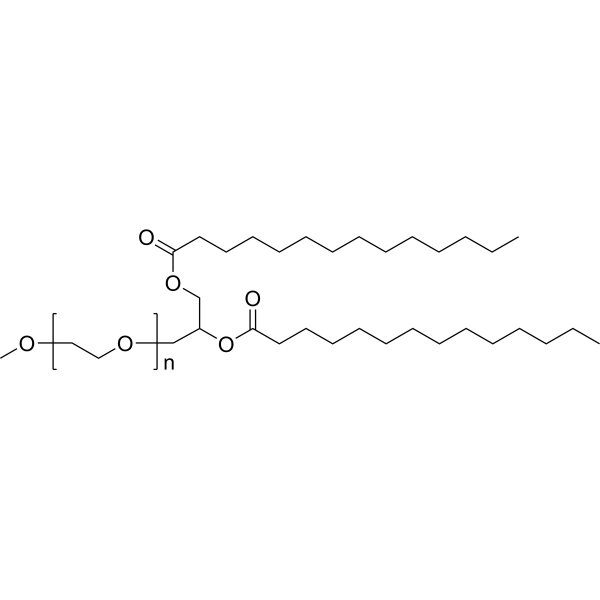
MPEG-DMG, chemically known as Methoxy Polyethylene Glycol-Distearoyl Phosphatidylglycerol or more commonly referred to in specific contexts as a PEGylated lipid derivative, is a specialized functional material widely utilized in the field of pharmaceutical nanotechnology. While exact molecular formulas can vary slightly depending on the specific polydispersity of the PEG chain and the synthesis batch, it generally consists of a methoxy-polyethylene glycol (mPEG) chain covalently linked to a distearoyl phosphatidylglycerol (DSPG) lipid backbone. This conjugation creates an amphiphilic molecule capable of self-assembling into stable liposomal structures. The CAS number for this specific modified lipid is not always universally assigned a single standard identifier due to its custom synthesis nature, though related components often carry distinct registry numbers; researchers typically rely on supplier-specific documentation for precise batch verification.
The primary application of MPEG-DMG lies in the development of long-circulating liposomal drug delivery systems. By incorporating this polymer-lipid conjugate into liposome bilayers, scientists achieve "stealth" properties that significantly reduce recognition by the reticuloendothelial system (RES). This prolongs the circulation half-life of therapeutic agents encapsulated within the vesicles, allowing them to reach target tissues more effectively. It is frequently employed in oncology to deliver cytotoxic drugs to tumor sites while minimizing systemic toxicity. Furthermore, MPEG-DMG enhances the stability of liposomes during storage and prevents aggregation in biological fluids. Its biocompatibility and low immunogenicity make it suitable for various biomedical applications beyond simple drug delivery, including gene therapy vectors and diagnostic imaging carriers. As a critical component in advanced formulation science, this molecule bridges the gap between synthetic polymers and natural lipids, offering a versatile platform for next-generation therapeutics. Its ability to modulate surface charge and steric hindrance allows for fine-tuning of pharmacokinetic profiles, making it an indispensable tool in modern medicinal chemistry and clinical trial preparations for complex diseases.


![6-broMo-2-chloro-8-cyclopentyl-5-Methylpyrido[2,3-d]pyriMidin-7(8H)-one](https://eimg.pharmasources.com/image/20250617/4zoOybJjzUTk0UgguabMkX7VnrDIlxHluERwqkjK.jpg)




 (All Rights Reserved)