Product Description
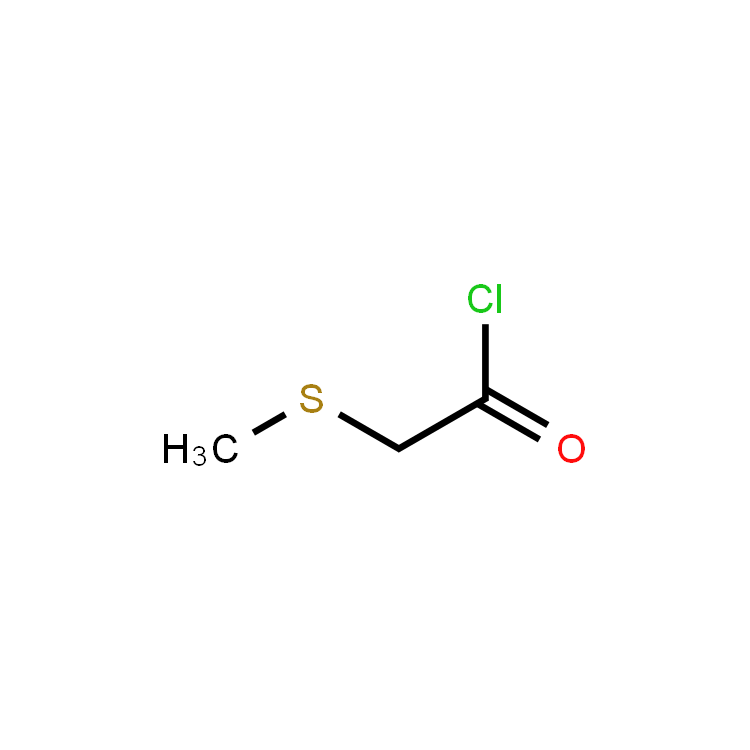
(Methylthio)acetyl chloride、35928-65-5
AI Product Description
*The following content is generated by AI and is for reference only.
(Methylthio)acetyl chloride, chemically known as 2-(methylthio)acetyl chloride, is a versatile organic intermediate widely utilized in the synthesis of pharmaceuticals, agrochemicals, and advanced materials. With the molecular formula C3H5ClOS and the CAS registry number 1079-84-7, this compound serves as a crucial building block for introducing the methylthioacetyl moiety into complex molecular structures. The molecule features a reactive acyl chloride group attached to a carbon chain bearing a sulfide functionality, which dictates its high reactivity towards nucleophiles such as amines, alcohols, and phenols.
In the pharmaceutical industry, (Methylthio)acetyl chloride is frequently employed as an acylating agent to synthesize thioester derivatives and various sulfur-containing heterocycles. These structural motifs are often integral to the biological activity of modern drugs, including antibiotics, anti-inflammatory agents, and cardiovascular therapeutics. The presence of the sulfur atom can significantly influence the metabolic stability and binding affinity of the resulting drug candidates, making this reagent indispensable for medicinal chemists engaged in lead optimization. Furthermore, in the field of agrochemicals, it acts as a precursor for developing novel herbicides and fungicides that target specific enzymatic pathways in pests while minimizing environmental impact.
The chemical properties of this substance require careful handling due to its moisture sensitivity; upon contact with water, it rapidly hydrolyzes to release corrosive hydrogen chloride gas and form the corresponding carboxylic acid. Consequently, storage must be conducted under anhydrous conditions, typically in sealed containers at low temperatures, away from incompatible bases and oxidizing agents. Its volatility and pungent odor also necessitate the use of appropriate personal protective equipment and fume hoods during laboratory or industrial processing. Beyond fine chemical synthesis, research continues to explore its potential in material science for creating specialized polymers with unique electronic or optical properties. As a cost-effective and highly reactive intermediate, (Methylthio)acetyl chloride remains a staple in the toolkit of synthetic chemists aiming to construct sophisticated sulfur-based architectures efficiently and selectively.











 (All Rights Reserved)
![8-Oxa-1,3-diazaspiro[4.5]decane-2,4-dione](https://eimg.pharmasources.com/image/product/20250403/60fa7223d5a34f24138486ceea0ffb15jpg)
![6,8-Dioxo-5,7-diazaspiro[3.4]octane-2-carboxylic acid](https://eimg.pharmasources.com/image/product/20250403/02effeb5a7639bc84ff1f3add3c0c64fjpg)
![8,16-Diazadispiro[6.1.6.2]heptadecan-17-one](https://eimg.pharmasources.com/image/product/20250403/ca91cba8b87e53fc879f8d8764873a40jpg)