Product Description
Appearance and properties: transparent colorless liquid to light yellow liquid
Density: 1.305 g/mL at 25 °C(lit.)
Melting point: 14-16 °C
Boiling point: 85 °C4 mm Hg(lit.)
Refractive index: n20/D 1.456(lit.)
Water solubility: 71 g/L (20 ºC)
AI Product Description
*The following content is generated by AI and is for reference only.
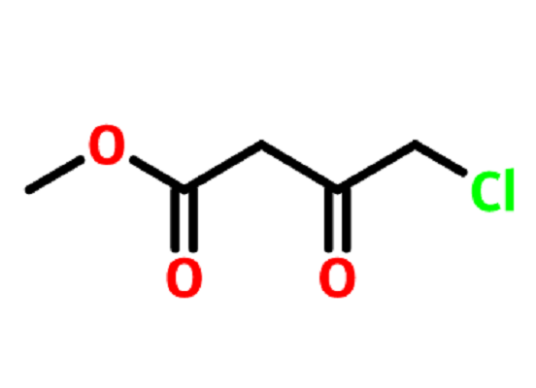
Methyl 4-chloroacetoacetate, chemically identified by the CAS number 106-52-7, is a versatile and highly reactive intermediate widely utilized in the fields of organic synthesis, pharmaceutical development, and agrochemical manufacturing. With the molecular formula C5H7ClO3 and a molecular weight of approximately 150.56 g/mol, this compound features a unique structural arrangement comprising a methyl ester group linked to an acetyl moiety bearing a chlorine atom at the alpha position relative to the ketone. This specific configuration endows the molecule with significant electrophilic character, making it an essential building block for constructing complex heterocyclic systems.
The primary application of Methyl 4-chloroacetoacetate lies in its role as a key precursor for synthesizing various pyrazole, thiazole, and pyrimidine derivatives. These heterocycles are fundamental scaffolds found in numerous bioactive compounds, including anti-inflammatory agents, antibiotics, antifungals, and herbicides. In the pharmaceutical industry, researchers frequently employ this reagent to introduce nitrogen or sulfur-containing rings into target molecules through nucleophilic substitution reactions, where the chloro group acts as a leaving group. Furthermore, its utility extends to the production of dyes and specialized polymers, where its reactivity allows for controlled chain modification and functionalization.
Handling this chemical requires strict adherence to safety protocols due to its potential irritant properties and reactivity with moisture. It should be stored in a cool, dry place away from incompatible substances such as strong oxidizers or bases to prevent decomposition or hazardous exothermic reactions. The purity of commercial grades typically exceeds 98%, ensuring reliability for high-precision laboratory applications and industrial scale-up processes. As demand grows for novel therapeutic agents and sustainable agricultural chemicals, the strategic importance of Methyl 4-chloroacetoacetate remains robust within the global fine chemical supply chain. Its ability to facilitate efficient multi-step syntheses makes it an indispensable tool for chemists aiming to accelerate drug discovery and optimize material properties. Ultimately, this compound serves as a critical bridge between simple starting materials and advanced functional molecules, driving innovation across multiple scientific disciplines.



 (All Rights Reserved)


![8-Oxa-1,3-diazaspiro[4.5]decane-2,4-dione](https://eimg.pharmasources.com/image/product/20250403/60fa7223d5a34f24138486ceea0ffb15jpg)


![8,16-Diazadispiro[6.1.6.2]heptadecan-17-one](https://eimg.pharmasources.com/image/product/20250403/ca91cba8b87e53fc879f8d8764873a40jpg)
![6,8-Dioxo-5,7-diazaspiro[3.4]octane-2-carboxylic acid](https://eimg.pharmasources.com/image/product/20250403/02effeb5a7639bc84ff1f3add3c0c64fjpg)

