Product Description
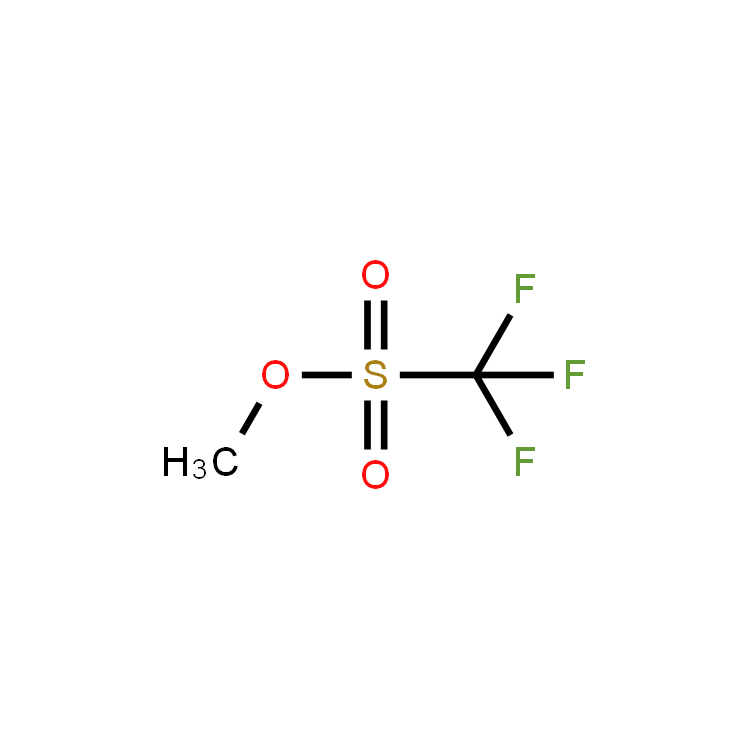
Methyl trifluoromethanesulfonate、333-27-7
AI Product Description
*The following content is generated by AI and is for reference only.
Methyl trifluoromethanesulfonate, commonly known as methyl triflate, is a highly reactive organosulfur compound widely utilized in organic synthesis and pharmaceutical manufacturing. With the molecular formula CH3F3O3S and the CAS Registry Number 2106-58-7, this colorless to pale yellow liquid possesses a distinct, pungent odor. Its chemical structure features a methyl group attached to a triflate anion, creating an exceptionally strong electrophile due to the stability of the triflate leaving group.
The primary application of methyl triflate lies in its role as a potent methylating agent. It effectively transfers methyl groups to nucleophiles such as oxygen, nitrogen, sulfur, and carbon atoms under mild conditions where other reagents like dimethyl sulfate might fail or require harsher parameters. This capability makes it indispensable for synthesizing complex natural products, bioactive molecules, and advanced materials. In the pharmaceutical industry, it facilitates the methylation of sensitive substrates without causing unwanted side reactions, thereby improving reaction yields and purity. Furthermore, it serves as a key intermediate in the production of fluorinated compounds and specialized polymers.
Despite its utility, methyl triflate demands rigorous safety handling protocols. It is a corrosive substance that reacts violently with water, releasing toxic gases including hydrogen fluoride and sulfur dioxide. Consequently, it must be stored in tightly sealed containers under anhydrous conditions, typically in a cool, dry place away from incompatible materials. Exposure can cause severe burns to skin and eyes, and inhalation poses significant respiratory risks. Due to these hazards, appropriate personal protective equipment, including gloves, goggles, and fume hoods, is mandatory during all laboratory procedures involving this reagent.
In summary, methyl trifluoromethanesulfonate stands as a critical tool in modern chemistry for its unmatched efficiency in methylation reactions. While its high reactivity offers significant advantages in synthetic pathways, strict adherence to safety guidelines is essential to mitigate potential risks associated with its handling and storage. Researchers continue to leverage its unique properties to advance discoveries in drug development and material science, underscoring its enduring importance in the chemical landscape.











 (All Rights Reserved)
![8-Oxa-1,3-diazaspiro[4.5]decane-2,4-dione](https://eimg.pharmasources.com/image/product/20250403/60fa7223d5a34f24138486ceea0ffb15jpg)
![6,8-Dioxo-5,7-diazaspiro[3.4]octane-2-carboxylic acid](https://eimg.pharmasources.com/image/product/20250403/02effeb5a7639bc84ff1f3add3c0c64fjpg)
![8,16-Diazadispiro[6.1.6.2]heptadecan-17-one](https://eimg.pharmasources.com/image/product/20250403/ca91cba8b87e53fc879f8d8764873a40jpg)