Product Description
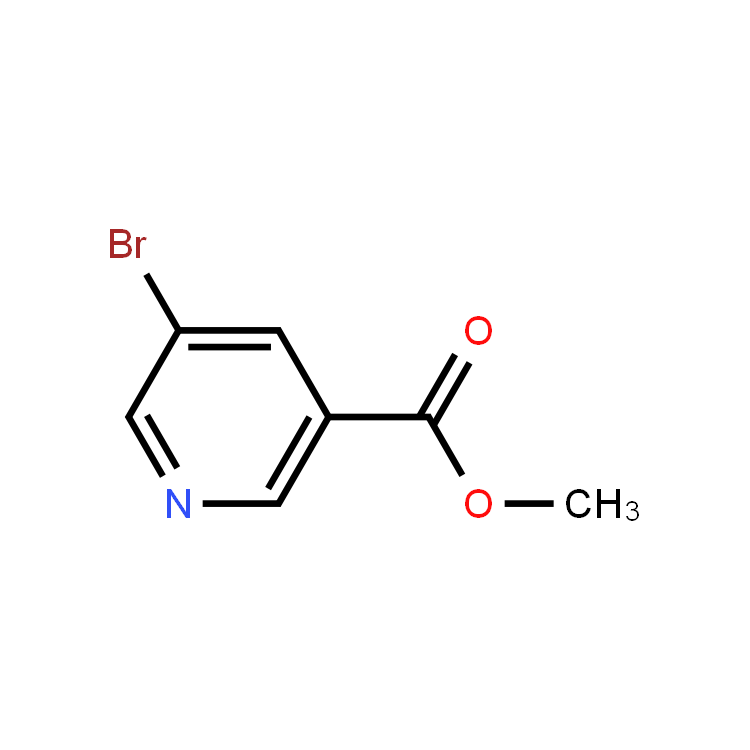
Methyl 5-bromonicotinate、29681-44-5
AI Product Description
*The following content is generated by AI and is for reference only.
Methyl 5-bromonicotinate is a versatile organic intermediate widely utilized in the pharmaceutical and agrochemical industries for the synthesis of complex heterocyclic compounds. Chemically classified as an ester derivative of nicotinic acid, this compound features a pyridine ring substituted with a bromine atom at the fifth position and a methyl ester group at the first position. Its molecular formula is C7H6BrNO2, and it is uniquely identified by the CAS Registry Number 3196-08-5. The presence of the reactive bromine atom makes it an ideal substrate for palladium-catalyzed cross-coupling reactions, such as Suzuki-Miyaura, Heck, and Sonogashira couplings, allowing chemists to efficiently attach diverse functional groups to the pyridine scaffold.
In drug discovery, Methyl 5-bromonicotinate serves as a critical building block for constructing novel bioactive molecules, including kinase inhibitors, antimalarial agents, and various anti-inflammatory drugs. The pyridine core is a privileged structure in medicinal chemistry due to its ability to interact with biological targets through hydrogen bonding and pi-stacking interactions. Furthermore, this reagent finds significant application in the development of agricultural chemicals, where it contributes to the synthesis of herbicides and fungicides designed to enhance crop protection and yield.
From a safety perspective, while generally stable under standard storage conditions, it should be handled with appropriate personal protective equipment to avoid skin contact or inhalation, as with most halogenated organic compounds. It is typically stored in a cool, dry place away from strong oxidizing agents and bases that might hydrolyze the ester moiety. The high purity grades available ensure consistent performance in multi-step synthetic pathways. As global demand for advanced therapeutics grows, the role of Methyl 5-bromonicotinate remains indispensable in modern chemical manufacturing. Its availability from major suppliers ensures reliable supply chains for research laboratories and industrial production facilities worldwide, supporting innovation in both healthcare and agriculture sectors.











 (All Rights Reserved)
![8-Oxa-1,3-diazaspiro[4.5]decane-2,4-dione](https://eimg.pharmasources.com/image/product/20250403/60fa7223d5a34f24138486ceea0ffb15jpg)
![6,8-Dioxo-5,7-diazaspiro[3.4]octane-2-carboxylic acid](https://eimg.pharmasources.com/image/product/20250403/02effeb5a7639bc84ff1f3add3c0c64fjpg)
![8,16-Diazadispiro[6.1.6.2]heptadecan-17-one](https://eimg.pharmasources.com/image/product/20250403/ca91cba8b87e53fc879f8d8764873a40jpg)