*The following content is generated by AI and is for reference only.
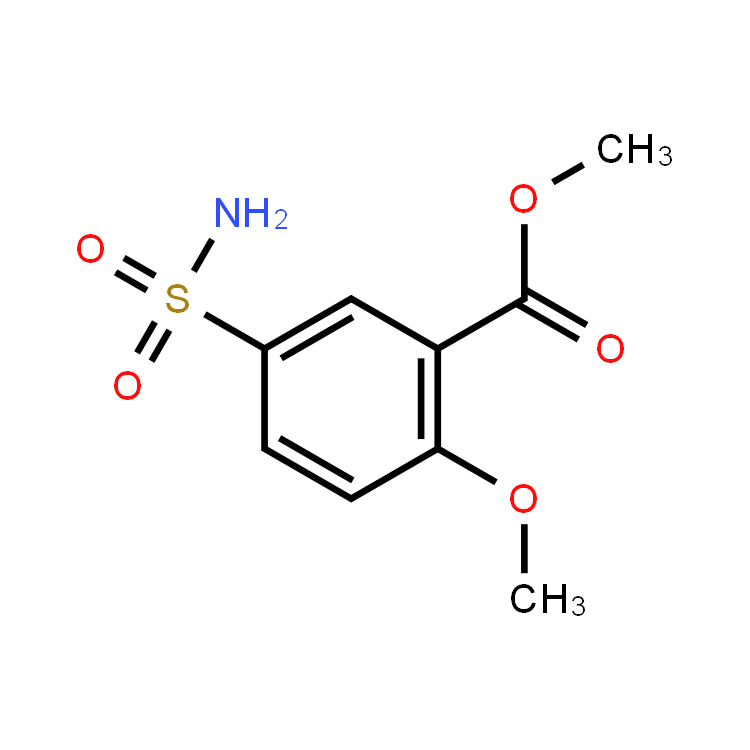
Methyl 5-(aminosulfonyl)-2-methoxybenzoate is a specialized organic compound characterized by its unique structural arrangement, featuring a benzoate core substituted with both a methoxy group and an aminosulfonyl moiety. With the molecular formula C9H11NO5S and a molecular weight of approximately 245.25 g/mol, this chemical serves as a critical intermediate in modern pharmaceutical synthesis and agrochemical research. The presence of the sulfonamide group combined with the ester functionality offers versatile reactivity, allowing chemists to engage in various nucleophilic substitutions and coupling reactions essential for constructing complex heterocyclic frameworks.
The primary application of Methyl 5-(aminosulfonyl)-2-methoxybenzoate lies in the development of novel bioactive molecules. It acts as a key building block for synthesizing sulfa drug derivatives, which are renowned for their antibacterial properties. Furthermore, due to the specific positioning of the substituents on the aromatic ring, this compound is frequently utilized in the preparation of enzyme inhibitors and potential anti-inflammatory agents. In the agricultural sector, it contributes to the creation of herbicides and fungicides that target specific metabolic pathways in pests while minimizing environmental impact.
While specific safety data sheets (SDS) should be consulted before handling, general laboratory protocols suggest treating the substance with standard precautions for organic solids. It is typically stored in a cool, dry place away from incompatible oxidizers and strong acids to prevent degradation or unwanted hydrolysis of the ester linkage. Researchers often utilize high-performance liquid chromatography (HPLC) and nuclear magnetic resonance (NMR) spectroscopy to verify the purity and identity of batches during quality control processes. As the demand for targeted therapies grows, intermediates like this one remain indispensable in medicinal chemistry laboratories worldwide, facilitating the rapid prototyping of new drug candidates. Its commercial availability ensures that scientists can efficiently integrate these structures into larger synthetic schemes, accelerating the timeline from discovery to clinical evaluation.