Product Description
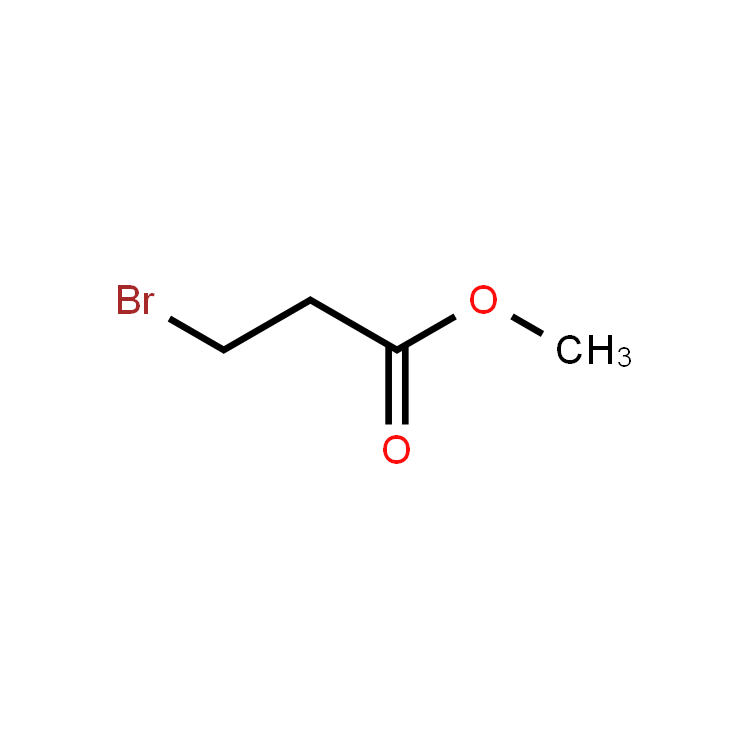
Methyl 3-Bromopropionate、3395-91-3
AI Product Description
*The following content is generated by AI and is for reference only.
Methyl 3-Bromopropionate, chemically designated as methyl 3-bromopropanoate, is a versatile halogenated organic compound widely utilized in the pharmaceutical and agrochemical industries. With the molecular formula C4H7BrO2 and a molecular weight of approximately 180.99 g/mol, this colorless to pale yellow liquid serves as a critical building block for complex molecular synthesis. Its standard CAS registry number is 598-35-0, ensuring precise identification across global chemical databases and supply chains.
The primary utility of Methyl 3-Bromopropionate lies in its role as an alkylating agent. The presence of the reactive bromine atom at the terminal position makes it highly susceptible to nucleophilic substitution reactions. Consequently, it is extensively employed in the construction of heterocyclic rings, such as pyrrolidines and piperidines, which are fundamental scaffolds in numerous active pharmaceutical ingredients (APIs). In medicinal chemistry, researchers utilize this reagent to introduce propionic acid derivatives into target molecules, facilitating the development of novel therapeutics for conditions ranging from cardiovascular diseases to neurological disorders.
Beyond pharmaceutical applications, this compound finds significant use in the synthesis of specialized agrochemicals, including herbicides and insecticides. Its ability to form stable carbon-carbon and carbon-heteroatom bonds allows for the efficient production of high-value intermediates. Furthermore, it acts as a precursor in the manufacturing of dyes, perfumes, and polymer additives, contributing to the broader fine chemical sector. Due to its volatility and potential irritant properties, handling requires appropriate safety measures, including the use of fume hoods and personal protective equipment.
In industrial settings, Methyl 3-Bromopropionate is valued for its cost-effectiveness and high purity availability. It enables multi-step synthetic pathways with excellent yields, making it indispensable for process chemists aiming to scale up laboratory discoveries to commercial production. As a key intermediate, it bridges the gap between simple commodity chemicals and sophisticated functional materials, driving innovation across multiple scientific disciplines while maintaining strict adherence to regulatory standards for hazardous substances.











 (All Rights Reserved)
![8-Oxa-1,3-diazaspiro[4.5]decane-2,4-dione](https://eimg.pharmasources.com/image/product/20250403/60fa7223d5a34f24138486ceea0ffb15jpg)
![6,8-Dioxo-5,7-diazaspiro[3.4]octane-2-carboxylic acid](https://eimg.pharmasources.com/image/product/20250403/02effeb5a7639bc84ff1f3add3c0c64fjpg)
![8,16-Diazadispiro[6.1.6.2]heptadecan-17-one](https://eimg.pharmasources.com/image/product/20250403/ca91cba8b87e53fc879f8d8764873a40jpg)