Product Description
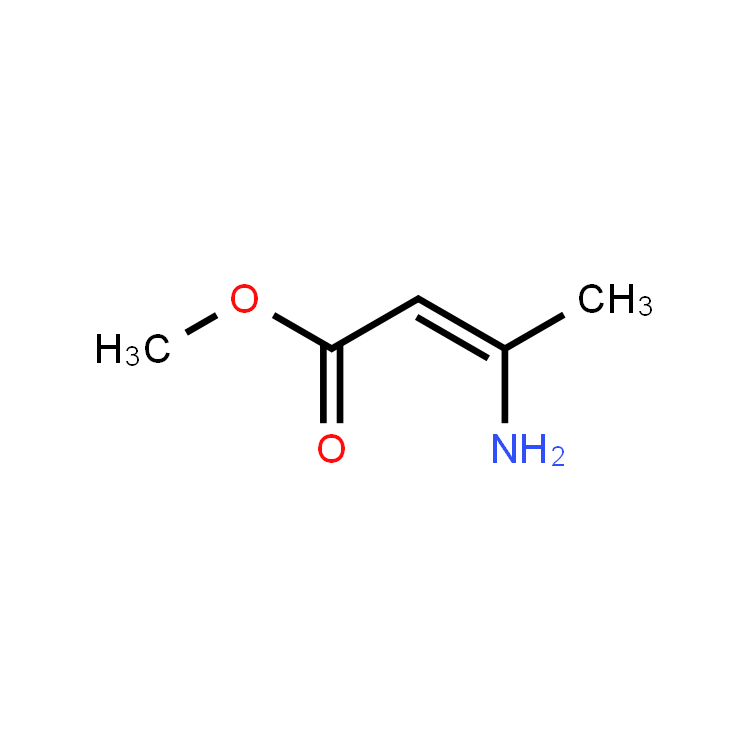
Methyl 3-aminocrotonate、14205-39-1
AI Product Description
*The following content is generated by AI and is for reference only.
Methyl 3-aminocrotonate is a specialized organic compound widely recognized in the fields of pharmaceutical research, agrochemical synthesis, and materials science. Its molecular formula is C₅H₉NO₂, and it carries the CAS Registry Number 10524-68-2. Structurally, this molecule features an amino group attached to a crotonate backbone with a methyl ester functionality, creating a versatile intermediate for various chemical transformations.
The primary utility of Methyl 3-aminocrotonate lies in its role as a key building block for heterocyclic chemistry. It serves as a crucial precursor in the synthesis of pyrazoles, pyridines, and other nitrogen-containing rings, which are fundamental structural motifs found in numerous bioactive molecules. In the pharmaceutical industry, derivatives synthesized from this compound often exhibit potential therapeutic properties, including anti-inflammatory, antimicrobial, and anticancer activities. Researchers frequently utilize its reactive amine and ester groups to introduce complexity into molecular architectures through condensation reactions, cyclization processes, or nucleophilic substitutions.
Beyond medicine, the compound finds applications in the development of advanced agrochemicals, where specific heterocycles act as herbicides or fungicides. The ability to fine-tune the electronic and steric properties of the final product makes Methyl 3-aminocrotonate highly valuable for medicinal chemists aiming to optimize drug candidates. Furthermore, its stability under standard laboratory conditions facilitates easy handling and storage, provided it is kept away from strong oxidizing agents and moisture to prevent hydrolysis of the ester group.
While primarily used in research and development settings rather than large-scale industrial manufacturing, the demand for high-purity samples remains steady among academic institutions and corporate R&D departments. Safety protocols dictate that it should be handled with appropriate personal protective equipment, as amines can be irritating to the skin and respiratory system. Overall, Methyl 3-aminocrotonate stands out as an essential reagent for chemists seeking to construct complex nitrogenous frameworks, bridging the gap between simple starting materials and sophisticated functional molecules with significant biological relevance.





 (All Rights Reserved)
![8-Oxa-1,3-diazaspiro[4.5]decane-2,4-dione](https://eimg.pharmasources.com/image/product/20250403/60fa7223d5a34f24138486ceea0ffb15jpg)
![6,8-Dioxo-5,7-diazaspiro[3.4]octane-2-carboxylic acid](https://eimg.pharmasources.com/image/product/20250403/02effeb5a7639bc84ff1f3add3c0c64fjpg)


![8,16-Diazadispiro[6.1.6.2]heptadecan-17-one](https://eimg.pharmasources.com/image/product/20250403/ca91cba8b87e53fc879f8d8764873a40jpg)