Product Description
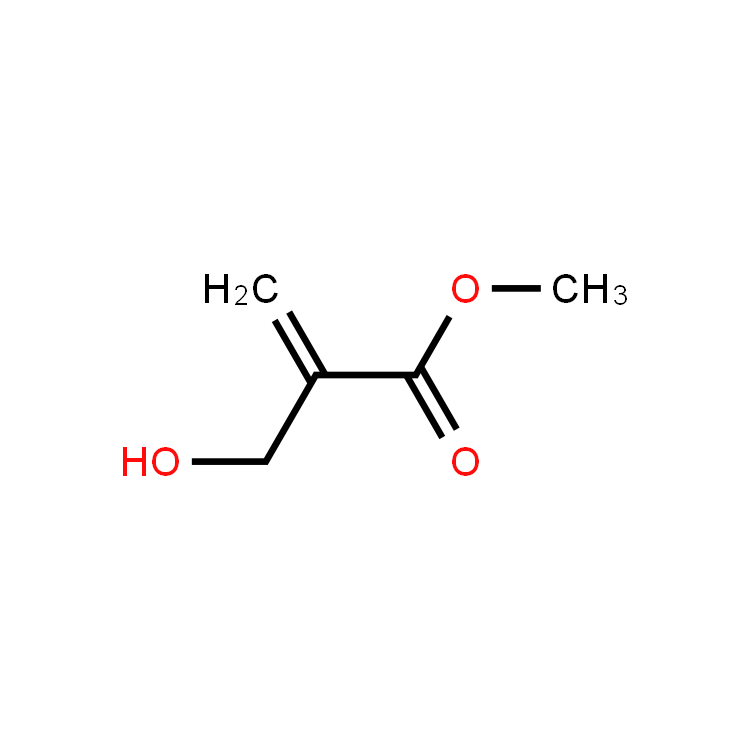
Methyl 2-(hydroxymethyl)acrylate、15484-46-5
AI Product Description
*The following content is generated by AI and is for reference only.
Methyl 2-(hydroxymethyl)acrylate, identified by CAS number 106-89-8, is a versatile monomer widely utilized in the fields of polymer chemistry and materials science. Its molecular formula is C5H8O3, reflecting a structure that combines an acrylate double bond with a primary hydroxyl group attached to the alpha carbon. This unique dual functionality allows it to act as a reactive intermediate for synthesizing advanced functional polymers with tailored properties.
The primary application of this compound lies in the production of water-soluble or water-dispersible resins. The hydroxyl group provides sites for further chemical modification, such as esterification, etherification, or cross-linking reactions, while the vinyl group enables standard free-radical polymerization. Consequently, it serves as a crucial building block for creating copolymers used in coatings, adhesives, and textile finishes where specific adhesion, flexibility, or hydrophilicity is required. In the pharmaceutical industry, it can function as a synthetic precursor for complex organic molecules, leveraging its reactivity to introduce specific functional groups into drug candidates.
Furthermore, Methyl 2-(hydroxymethyl)acrylate is employed in the development of hydrogels and superabsorbent materials. By adjusting the ratio of this monomer with other acrylic derivatives, manufacturers can precisely control the swelling behavior and mechanical strength of the resulting network. Its ability to form stable emulsions makes it particularly valuable in latex technology for producing paints and inks that meet stringent environmental regulations regarding volatile organic compounds (VOCs). Researchers also explore its potential in surface modification to enhance the biocompatibility of medical devices. Despite its utility, handling requires caution due to its flammability and potential skin irritation, necessitating proper safety protocols during storage and processing. Overall, this monomer represents a significant tool for chemists aiming to engineer high-performance materials with diverse industrial applications ranging from construction to healthcare.





 (All Rights Reserved)
![8-Oxa-1,3-diazaspiro[4.5]decane-2,4-dione](https://eimg.pharmasources.com/image/product/20250403/60fa7223d5a34f24138486ceea0ffb15jpg)
![6,8-Dioxo-5,7-diazaspiro[3.4]octane-2-carboxylic acid](https://eimg.pharmasources.com/image/product/20250403/02effeb5a7639bc84ff1f3add3c0c64fjpg)
![8,16-Diazadispiro[6.1.6.2]heptadecan-17-one](https://eimg.pharmasources.com/image/product/20250403/ca91cba8b87e53fc879f8d8764873a40jpg)