Product Description
Detailed Product Description
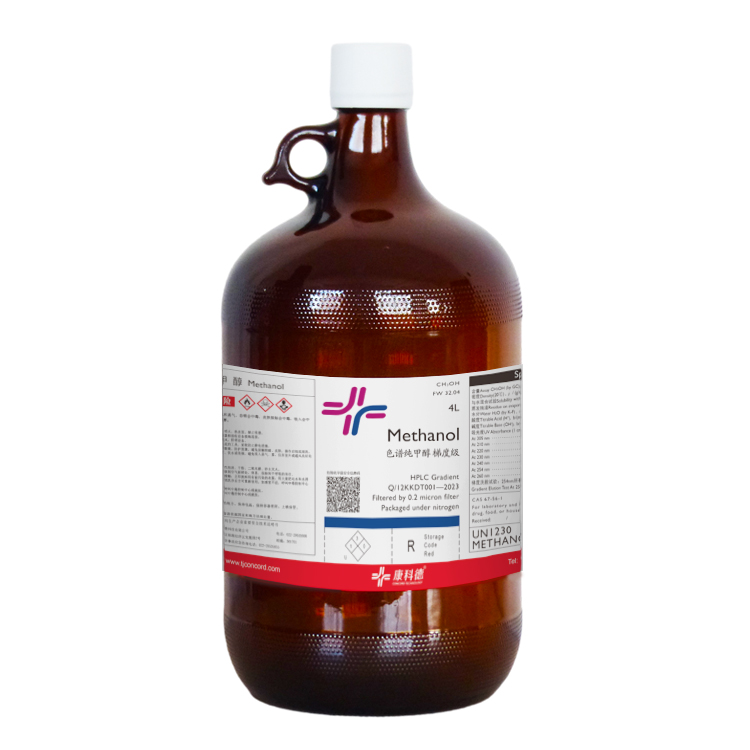
High purity solvent,
Low residue Low water,
Low UV-absorbance,
assuring optimum sensitivity,
lang term stability
Gradient Grade Methanol Specification
CAS.No:67-56-1
Molecular formula: CH3OH
Molecular weight: 32.04.
Refractive Index: 1.3288
AI Product Description
*The following content is generated by AI and is for reference only.
Methanol, HPLC Gradient Grade is a premium-grade solvent meticulously purified to meet the stringent requirements of high-performance liquid chromatography (HPLC) applications. With the chemical formula CH₃OH and the CAS Registry Number 67-56-1, this reagent serves as a fundamental component in modern analytical chemistry laboratories worldwide. As a polar protic solvent, methanol possesses unique solvating properties that make it indispensable for dissolving a wide array of organic compounds, particularly those found in pharmaceuticals, environmental samples, and biological fluids.
The "Gradient Grade" designation signifies that this specific batch has undergone rigorous purification processes to eliminate trace impurities such as water, aldehydes, ketones, and UV-absorbing contaminants. These minute impurities can severely compromise the sensitivity, resolution, and baseline stability of HPLC analyses. By ensuring an exceptionally low background absorbance in the ultraviolet range, typically below 0.03 AU at 254 nm, this grade of methanol allows analysts to detect analytes at parts-per-billion levels without interference from the solvent itself. It is specifically formulated to support gradient elution techniques, where the solvent composition changes over time to optimize separation efficiency and reduce analysis time.
In practical terms, Methanol HPLC Gradient Grade is extensively utilized as a mobile phase component in reversed-phase chromatography. It effectively modulates the polarity of the mobile phase, facilitating the separation of complex mixtures based on their hydrophobicity. Its compatibility with various detection systems, including UV-Vis, fluorescence, and mass spectrometry, further enhances its versatility. Laboratories rely on this high-purity solvent to ensure data accuracy, reproducibility, and compliance with regulatory standards in quality control and research settings. Whether used for drug development, forensic analysis, or food safety testing, this reagent remains a critical tool for achieving precise and reliable chromatographic results.





 (All Rights Reserved)