Product Description
Product Description:
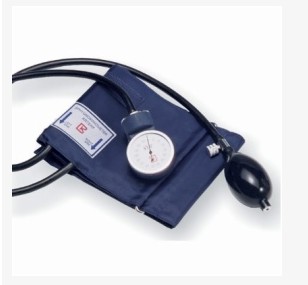
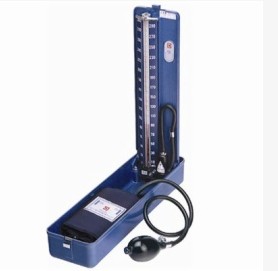
Aluminum Cover
Measure scope: 0-300mmHg
Accuracy: +/-3mmHg
Sub-division: 2mmHg
Color available: blue, grey, green, red, yellow, black
Packing: color box individual, 34.5*9.7*5.5cm
Qty: 20pcs/Ctn
GW: 23KGS/CTN
SIZE: 43*33*37cm/CTN
AI Product Description
*The following content is generated by AI and is for reference only.
The Mercury Sphygmomanometer is a classic medical device used for measuring blood pressure, serving as the gold standard in clinical settings for decades. Unlike pharmaceutical compounds, this instrument does not possess a molecular formula or a CAS (Chemical Abstracts Service) number, as these identifiers apply exclusively to chemical substances rather than mechanical apparatuses. Instead of a chemical structure, its composition primarily involves high-purity mercury contained within a glass column, housed inside a robust metal casing, often accompanied by an inflatable cuff and a stethoscope for auscultation. The device operates on hydrostatic principles, where the height of the mercury column directly correlates to the pressure exerted by the blood against the arterial walls when the cuff is inflated.
Historically, the mercury sphygmomanometer has been renowned for its exceptional accuracy, stability, and reliability. It provides clinicians with precise systolic and diastolic readings, which are critical for diagnosing hypertension, monitoring cardiovascular health, and guiding treatment plans. Its design ensures minimal drift over time, making it superior to many digital alternatives in environments requiring rigorous calibration. However, due to the toxicity of elemental mercury and strict environmental regulations regarding its disposal, the use of these devices is increasingly restricted or phased out in favor of aneroid or oscillometric digital monitors in many countries. Despite this transition, many medical professionals still prefer the mercury model for its direct physical measurement capability, which avoids the electronic errors sometimes associated with battery-powered sensors.
In summary, while the Mercury Sphygmomanometer lacks chemical identifiers like a molecular formula or CAS number, it remains a pivotal tool in medical diagnostics. Its enduring legacy lies in its mechanical precision and role as the benchmark against which other blood pressure technologies are measured. As healthcare evolves toward safer, eco-friendly solutions, the transition away from mercury-based instruments continues, yet its historical significance and technical excellence remain unmatched in the field of vital sign monitoring.





 (All Rights Reserved)