*The following content is generated by AI and is for reference only.
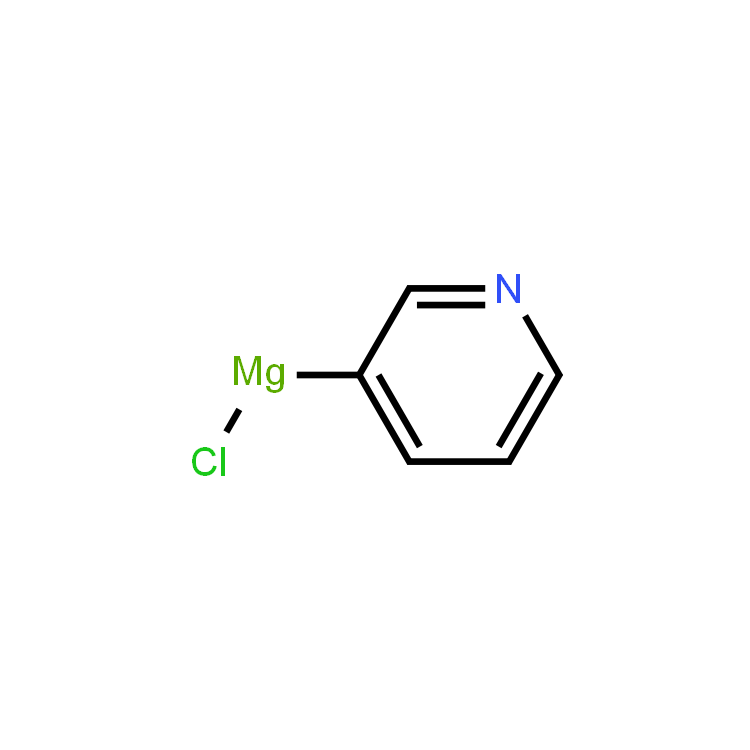
Magnesium chloro-3-pyridinyl is a specialized organometallic compound featuring a magnesium center coordinated with a chlorinated pyridine ligand at the 3-position. Its molecular formula is typically represented as C₅H₃ClMgN, reflecting the substitution of a hydrogen atom on the pyridine ring with a chlorine atom and the attachment of a magnesium moiety. The precise CAS number for this specific regioisomer may vary depending on the exact counter-ion or solvation state in commercial preparations; however, it generally falls within the range of organomagnesium halides used in advanced synthesis. This reagent serves as a critical building block in organic chemistry, particularly for cross-coupling reactions such as Kumada-Corriu couplings, where it facilitates the formation of carbon-carbon bonds between the pyridyl group and various electrophiles like aryl halides or alkyl halides.
The presence of the chlorine substituent at the meta-position significantly influences the electronic properties and steric profile of the molecule compared to unsubstituted analogues. This modification can enhance reactivity selectivity or stability under specific reaction conditions, making it valuable for synthesizing complex heterocyclic frameworks found in pharmaceuticals and agrochemicals. Researchers utilize Magnesium chloro-3-pyridinyl to construct functionalized pyridine derivatives that are essential intermediates in drug discovery pipelines. These compounds often exhibit unique biological activities due to the nitrogen-containing aromatic system, which can interact with various biological targets.
In laboratory settings, handling this reagent requires strict adherence to safety protocols due to its sensitivity to moisture and air. It is typically supplied as a solution in dry ethers like tetrahydrofuran (THF) or diethyl ether to maintain stability. The preparation involves the direct insertion of magnesium metal into 3-chloropyridine under inert atmosphere conditions. As a versatile tool in synthetic methodology, this material enables chemists to access diverse molecular architectures with high efficiency. Its application extends beyond simple coupling, offering pathways to novel materials and fine chemicals. Consequently, Magnesium chloro-3-pyridinyl remains an important asset for academic research and industrial process development, bridging fundamental organometallic theory with practical chemical manufacturing needs.