Product Description
GMP factory,stable supplying, competitive price
AI Product Description
*The following content is generated by AI and is for reference only.
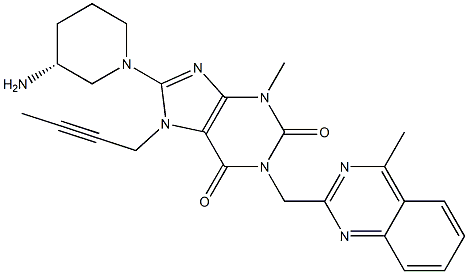
Linagliptin is a potent and selective dipeptidyl peptidase-4 (DPP-4) inhibitor primarily utilized in the management of type 2 diabetes mellitus. Its molecular formula is C₂₈H₃₁N₇O₄, and it carries the CAS Registry Number 254160-07-3. Unlike many other oral antidiabetic agents, Linagliptin exhibits a unique pharmacokinetic profile characterized by non-renal elimination. Approximately ninety percent of the drug is excreted via the biliary-fecal route, while only a minor fraction is eliminated through the kidneys. This distinctive metabolic pathway makes it particularly advantageous for patients with varying degrees of renal impairment, as it generally does not require dose adjustments even in severe kidney dysfunction or end-stage renal disease.
The primary mechanism of action involves the inhibition of the DPP-4 enzyme, which is responsible for the rapid degradation of incretin hormones, specifically glucagon-like peptide-1 (GLP-1) and glucose-dependent insulinotropic polypeptide (GIP). By blocking this enzyme, Linagliptin increases circulating levels of active incretins, thereby stimulating glucose-dependent insulin secretion from pancreatic beta cells and suppressing inappropriate glucagon release from alpha cells. This dual action effectively lowers blood glucose levels without causing significant hypoglycemia when used as monotherapy, as the effect is strictly dependent on the presence of elevated glucose concentrations.
Clinically, Linagliptin is indicated as an adjunct to diet and exercise to improve glycemic control in adults with type 2 diabetes. It can be administered as a single agent or in combination with metformin, sulfonylureas, thiazolidinediones, or insulin. The standard dosage is typically 5 mg once daily, regardless of meal timing. Common side effects are generally mild and may include nasopharyngitis, headache, or upper respiratory tract infections. While rare cases of hypersensitivity reactions, including angioedema and severe skin conditions like Stevens-Johnson syndrome, have been reported, the overall safety profile remains favorable. As a next-generation DPP-4 inhibitor, Linagliptin offers a convenient dosing regimen and a robust safety profile, making it a valuable therapeutic option in the comprehensive management of type 2 diabetes across diverse patient populations.



 (All Rights Reserved)