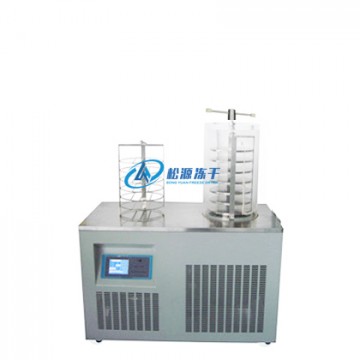
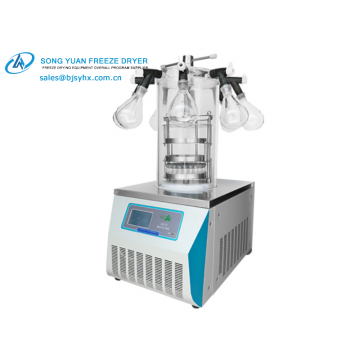
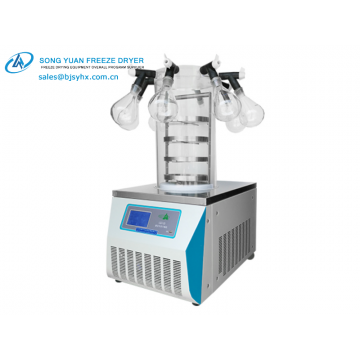
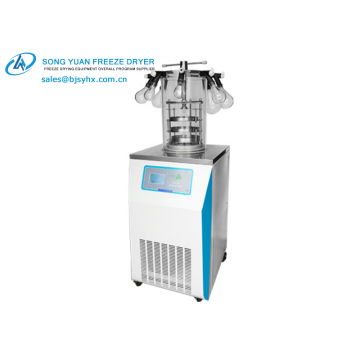
Product Description
Place of Origin: Made in China
Price: 1700-350000USD/set
· freeze drying area:0.12㎡
· material tray dia.:Ф200mm
· ice collecting capacity:3-4kg/24h
· ultimate vacuum:≤5pa br/> · power:970w
· material capacity:1.2L(thickness :10mm)
· cold trap temperature:≤-56℃ ,optional≤-80℃ br/>
AI Product Description
*The following content is generated by AI and is for reference only.
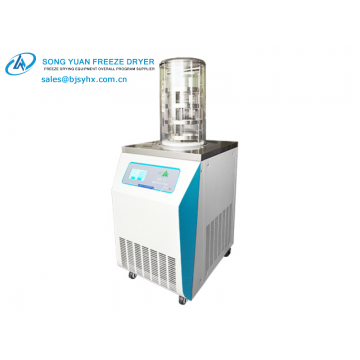
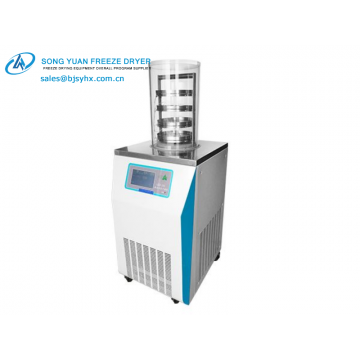
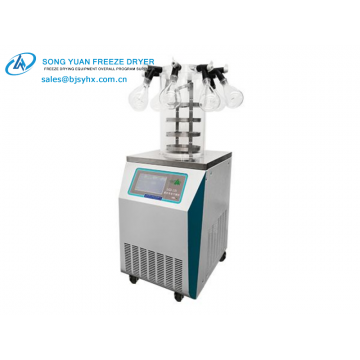
The LGJ-10 Standard Type Experimental Vacuum Freeze Dryer is a versatile laboratory instrument designed for the efficient preservation of biological, chemical, and food samples through lyophilization. This device operates by freezing the material and then reducing the surrounding pressure to allow the frozen water in the sample to sublimate directly from solid to gas, bypassing the liquid phase. This process effectively removes moisture while maintaining the structural integrity, biological activity, and chemical stability of heat-sensitive substances. Consequently, it is widely utilized in pharmaceutical research for vaccine production, in biotechnology for enzyme storage, in food science for instant coffee and fruit powder manufacturing, and in academic settings for long-term specimen preservation.
Key features of the LGJ-10 include its compact design, making it ideal for benchtop use in standard laboratories. It typically incorporates an electrically heated shelf system to control drying temperatures precisely, ensuring uniform sublimation across all samples. The unit is equipped with a high-efficiency vacuum pump and a cold trap to capture water vapor, preventing contamination and protecting the pump oil. Its user-friendly interface allows operators to monitor and adjust parameters such as temperature, vacuum level, and drying time automatically or manually.
When operating the LGJ-10, several critical precautions must be observed to ensure safety and optimal performance. First, users should strictly avoid placing flammable or volatile solvents inside the chamber unless the equipment is specifically rated for such materials, as the vacuum environment can increase explosion risks. Second, proper sealing of sample containers is essential to prevent cross-contamination and ensure effective moisture removal. Third, regular maintenance of the cold trap and vacuum pump oil is necessary to maintain system efficiency; neglecting this can lead to equipment failure or sample degradation. Finally, operators must wear appropriate personal protective equipment when handling frozen samples or opening the chamber after operation to avoid frostbite. By adhering to these guidelines, researchers can maximize the lifespan of the LGJ-10 and achieve consistent, high-quality results in their experimental work.









 (All Rights Reserved)