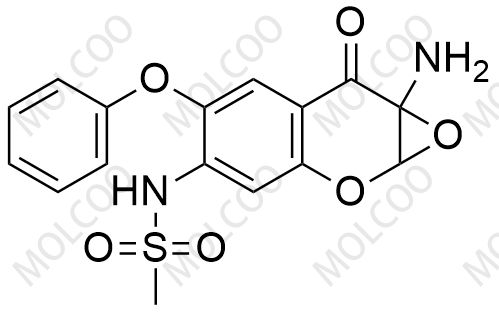
Product Description
Reference Standards &Impurity
AI Product Description
*The following content is generated by AI and is for reference only.
Levobunolol hydrochloride is a potent, non-selective beta-adrenergic blocking agent widely utilized in ophthalmology for the management of elevated intraocular pressure (IOP) associated with open-angle glaucoma and ocular hypertension. Chemically known as (S)-1-(tert-butylamino)-3-[(4-morpholinocarbonyl)phenoxy]propan-2-ol hydrochloride, this compound represents the active enantiomer of the racemic mixture known as bunolol. Its molecular formula is C19H30ClNO4, corresponding to a molecular weight of approximately 371.9 g/mol. The specific CAS registry number assigned to Levobunolol hydrochloride is 56849-34-8, which distinguishes it from its inactive counterpart and other related pharmaceutical agents.
The primary therapeutic mechanism of Levobunolol involves the blockade of both beta-1 and beta-2 adrenergic receptors within the ciliary body of the eye. By inhibiting these receptors, the drug effectively reduces the production of aqueous humor without significantly affecting pupil size or accommodation, thereby lowering IOP to prevent optic nerve damage and preserve visual field integrity. Clinically, it is formulated as an ophthalmic solution, typically administered as one drop in the affected eye(s) once or twice daily. Due to its long duration of action, it offers a convenient dosing schedule that enhances patient compliance compared to some shorter-acting alternatives.
While generally well-tolerated, systemic absorption can occur through the nasolacrimal duct, potentially leading to side effects such as bradycardia, hypotension, or bronchospasm, particularly in patients with pre-existing respiratory conditions like asthma or chronic obstructive pulmonary disease. Consequently, caution is advised when prescribing to individuals with cardiac conduction disorders or severe peripheral vascular disease. Patients are often instructed to apply gentle pressure to the inner corner of the eye after administration to minimize systemic uptake. As a generic medication available globally, Levobunolol remains a cornerstone therapy in glaucoma management, providing effective, cost-efficient control of intraocular pressure to mitigate the risk of irreversible blindness.












 (All Rights Reserved)