Product Description
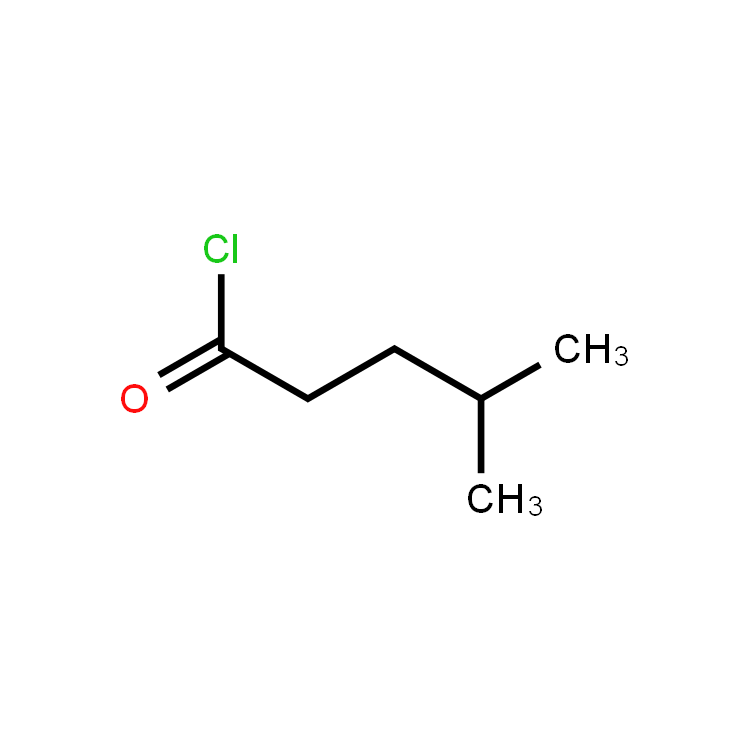
Isocaproyl chloride、38136-29-7
AI Product Description
*The following content is generated by AI and is for reference only.
Isocaproyl chloride, chemically known as 4-methylpentanoyl chloride, is a versatile acyl chloride derivative widely utilized in organic synthesis and industrial applications. With the molecular formula C6H11ClO and a CAS registry number of 542-78-9, this colorless to pale yellow liquid serves as a crucial electrophilic reagent for introducing branched acyl groups into various molecular frameworks. The compound features a distinctive four-carbon chain with a methyl substituent at the fourth position, which imparts specific steric and electronic properties compared to straight-chain analogs like hexanoyl chloride.
In pharmaceutical manufacturing, Isocaproyl chloride acts as an essential intermediate for synthesizing complex drug molecules, including certain antibiotics and anti-inflammatory agents where branched alkyl chains are required for biological activity or metabolic stability. Its high reactivity allows it to readily undergo nucleophilic substitution reactions with alcohols, amines, and phenols to form esters, amides, and other functional derivatives under controlled conditions. This property makes it indispensable in peptide chemistry and polymer science, where precise structural modifications are necessary to tailor material properties such as solubility, flexibility, or thermal resistance.
Beyond pharma, the chemical finds application in the production of specialty solvents, plasticizers, and fragrance ingredients. In the agrochemical sector, it contributes to the synthesis of herbicides and insecticides that require specific hydrophobic characteristics for effective penetration and efficacy. Due to its moisture sensitivity, handling requires strict adherence to safety protocols; exposure to air or water generates corrosive hydrogen chloride fumes, necessitating storage in sealed containers under inert atmospheres and the use of appropriate personal protective equipment during laboratory or industrial processing.
The demand for Isocaproyl chloride continues to grow as industries seek efficient routes to synthesize value-added chemicals with unique branching structures. Its role as a building block underscores the importance of fine chemical intermediates in modern manufacturing. Researchers and engineers rely on its predictable reactivity to optimize reaction pathways, reduce waste, and enhance product yields. As green chemistry principles evolve, efforts are underway to develop safer handling methods and more sustainable production processes for this vital reagent, ensuring its continued availability for diverse scientific and commercial endeavors across global markets.





 (All Rights Reserved)
![8-Oxa-1,3-diazaspiro[4.5]decane-2,4-dione](https://eimg.pharmasources.com/image/product/20250403/60fa7223d5a34f24138486ceea0ffb15jpg)
![6,8-Dioxo-5,7-diazaspiro[3.4]octane-2-carboxylic acid](https://eimg.pharmasources.com/image/product/20250403/02effeb5a7639bc84ff1f3add3c0c64fjpg)
![8,16-Diazadispiro[6.1.6.2]heptadecan-17-one](https://eimg.pharmasources.com/image/product/20250403/ca91cba8b87e53fc879f8d8764873a40jpg)