Product Description
| |
| Imatinib mesylate Chemical Properties |
| Melting point |
214-224°C |
| storage temp. |
2-8°C |
| solubility |
H2O: soluble10mg/mL, clear |
| form |
White solid |
AI Product Description
*The following content is generated by AI and is for reference only.
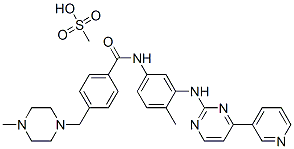
Imatinib mesylate, identified by the CAS number 220127-57-1, is a pioneering small-molecule tyrosine kinase inhibitor widely recognized for its transformative impact on oncology. Its chemical formula is C₂₉H₃₁N₇O·CH₄O₃S, reflecting the combination of the active imatinib base with methanesulfonic acid to form a stable salt suitable for pharmaceutical formulation. This compound was developed specifically to target the BCR-ABL fusion protein, a constitutively active tyrosine kinase resulting from the Philadelphia chromosome translocation, which drives the pathogenesis of chronic myeloid leukemia (CML).
The primary clinical application of Imatinib mesylate is the treatment of newly diagnosed and resistant CML in patients across all phases of the disease. Beyond hematologic malignancies, it has proven effective in managing gastrointestinal stromal tumors (GISTs) by inhibiting the KIT receptor tyrosine kinase, as well as treating dermatofibrosarcoma protuberans (DFSP) through PDGFR inhibition. The drug functions by binding to the ATP-binding pocket of these kinases, thereby preventing phosphorylation and downstream signaling pathways that promote uncontrolled cell proliferation and survival. By blocking these specific molecular targets, Imatinib induces apoptosis in cancer cells while sparing normal tissues, representing a paradigm shift toward precision medicine.
Administered orally as tablets or capsules, Imatinib mesylate offers significant bioavailability and convenience for long-term therapy. Common side effects may include fluid retention, nausea, muscle cramps, and fatigue, though most are manageable with supportive care. Since its approval, this agent has dramatically improved survival rates for CML patients, turning a once fatal diagnosis into a manageable chronic condition for many. Ongoing research continues to explore its potential in other solid tumors and rare genetic disorders driven by similar kinase dysregulation. As a cornerstone of targeted cancer therapy, Imatinib mesylate remains a critical tool in modern pharmacotherapy, saving countless lives and setting a benchmark for future drug development in the field of molecular oncology.





 (All Rights Reserved)




![6,8-Dioxo-5,7-diazaspiro[3.4]octane-2-carboxylic acid](https://eimg.pharmasources.com/image/product/20250403/02effeb5a7639bc84ff1f3add3c0c64fjpg)
![8,16-Diazadispiro[6.1.6.2]heptadecan-17-one](https://eimg.pharmasources.com/image/product/20250403/ca91cba8b87e53fc879f8d8764873a40jpg)
![8-Oxa-1,3-diazaspiro[4.5]decane-2,4-dione](https://eimg.pharmasources.com/image/product/20250403/60fa7223d5a34f24138486ceea0ffb15jpg)