The product is for the treatment and prophylaxis of hypovolemia and acute normovolemic haemodilution (ANH). "Highlights: 1, Good expansion effects. 2, Low tendency of drug accumulation, and high safety. 3, Less impact on blood coagulation. 4, Time to market: 2006 5, Exported countries: Chile, India, Philippines, Pakistan, etc. 6,Originator: Fresenius Kabi, Voluven® Registration Dossiers:non-clinical & clinical part, drug substance part and drug product part."
*The following content is generated by AI and is for reference only.
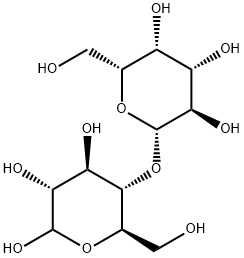
Hydroxyethyl Starch 130/0.4 and Sodium Chloride Injection is a widely utilized synthetic colloid plasma volume expander designed for the acute management of hypovolemia and prevention of shock in clinical settings. Chemically, it consists of hydroxyethyl starch (HES) with a mean molecular weight of approximately 130 kDa and a molar substitution of 0.4, suspended in an isotonic solution containing sodium chloride. The specific chemical formula for the HES polymer itself varies due to its polydisperse nature, but the active component is derived from amylopectin modified through hydroxyethylation. While the CAS number for the pure polymer is not singular due to its complex structure, it is generally associated with the generic identifier for hydroxyethyl starch derivatives used in pharmaceutical formulations.
The primary therapeutic application of this injection is the rapid restoration of intravascular volume following blood loss, trauma, surgery, or severe burns. By increasing oncotic pressure within the vascular compartment, it effectively retains fluid in the bloodstream, thereby improving hemodynamic stability and tissue perfusion without the need for donor blood products. The 130/0.4 specification represents a significant advancement over earlier generations of HES solutions; the lower molecular weight and reduced degree of substitution minimize the risk of accumulation in tissues and reduce the potential for coagulopathy and renal impairment compared to higher molecular weight variants. This formulation is administered intravenously under strict medical supervision, with dosage adjusted based on patient weight, severity of volume depletion, and ongoing monitoring of vital signs and laboratory parameters.
Safety profiles indicate that while generally well-tolerated, caution is advised in patients with severe renal insufficiency, known hypersensitivity to corn-derived products, or those with severe coagulation disorders. Common side effects may include mild pruritus, nausea, or transient alterations in coagulation factors. As a sterile, non-pyrogenic solution, it serves as a critical resource in emergency medicine, intensive care units, and perioperative environments where immediate volume expansion is essential to prevent organ failure and support physiological recovery until definitive treatment can be established. Its compatibility with various infusion protocols makes it a versatile tool in modern fluid resuscitation strategies.






 (All Rights Reserved)