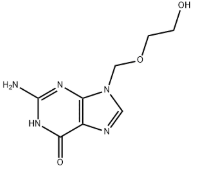
ganciclovir, chemically known as 9-(1, 3-dihydroxy-2-propoxymethyl) guanine, is a nucleoside antiviral drug and a guanine nucleoside derivative. It has a broad-spectrum and highly efficient inhibitory effect on herpes virus and is the first choice for treating cytomegalovirus infection. It also has a strong effect on hepatitis B virus and adenovirus.
*The following content is generated by AI and is for reference only.
Ganciclovir is a potent antiviral medication primarily utilized in the management of cytomegalovirus (CMV) infections. Chemically known as 9-[(1,3-dihydroxy-2-propoxy)methyl]guanine, its molecular formula is C₉H₁₄N₅O₄ and it carries the CAS registry number 82410-32-0. This synthetic nucleoside analogue functions by inhibiting viral DNA synthesis, making it a critical therapeutic agent for patients with compromised immune systems, such as those undergoing organ transplantation or living with advanced HIV/AIDS.
The mechanism of action involves selective phosphorylation by the viral kinase UL97, followed by further conversion into a triphosphate form by cellular kinases. Ganciclovir triphosphate then competitively inhibits the viral DNA polymerase, effectively halting viral replication without significantly affecting host cell DNA synthesis at therapeutic doses. Consequently, it is widely prescribed to treat CMV retinitis in AIDS patients, prevent CMV disease in transplant recipients, and manage severe CMV colitis or pneumonitis. It is also sometimes employed off-label for other herpesvirus infections like Epstein-Barr virus or varicella-zoster virus when standard therapies fail.
Administration typically occurs via intravenous infusion for severe cases or orally as ganciclovir capsules for maintenance therapy. However, the drug carries significant safety concerns, most notably bone marrow suppression leading to neutropenia, thrombocytopenia, and anemia. Renal toxicity is another major adverse effect requiring dose adjustments based on creatinine clearance. Due to these risks, patients require rigorous monitoring of blood counts and renal function throughout treatment. Despite its side effect profile, ganciclovir remains a cornerstone in antiviral therapy for life-threatening CMV infections. Newer prodrugs like valganciclovir have been developed to improve oral bioavailability, offering more convenient dosing regimens while maintaining efficacy. Ongoing research continues to explore combination therapies and novel delivery systems to minimize toxicity while maximizing antiviral potency against resistant strains.



![6-broMo-2-chloro-8-cyclopentyl-5-Methylpyrido[2,3-d]pyriMidin-7(8H)-one](https://eimg.pharmasources.com/image/20250617/4zoOybJjzUTk0UgguabMkX7VnrDIlxHluERwqkjK.jpg)













 (All Rights Reserved)