*The following content is generated by AI and is for reference only.
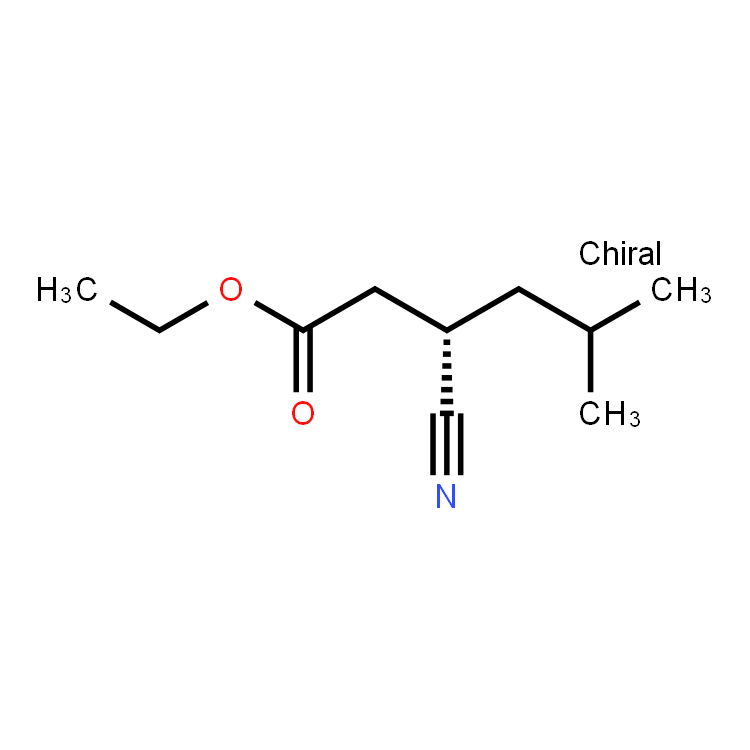
Ethyl (3S)-3-cyano-5-methylhexanoate is a specialized chiral organic compound widely recognized in the fields of fine chemical synthesis and pharmaceutical research. With the molecular formula C10H17NO2 and a precise molecular weight of approximately 183.25 g/mol, this ester serves as a crucial building block for constructing complex molecular architectures. Its defining characteristic is the presence of the (3S) stereochemistry, which ensures high optical purity essential for developing biologically active molecules where chirality dictates efficacy and safety profiles.
The primary application of ethyl (3S)-3-cyano-5-methylhexanoate lies in its role as an intermediate in the asymmetric synthesis of various pharmaceutical agents. The cyano group (-CN) at the C3 position acts as a versatile functional handle, readily undergoing hydrolysis to form carboxylic acids or reduction to primary amines. This versatility allows medicinal chemists to transform the molecule into amino acid derivatives, beta-lactam antibiotics, or other nitrogen-containing heterocycles critical for drug development. Furthermore, the branched alkyl chain derived from the 5-methylhexanoate moiety mimics natural lipid structures, potentially influencing the metabolic stability and bioavailability of final drug candidates.
In industrial settings, this compound is utilized by specialty chemical manufacturers to produce high-value intermediates for agrochemicals and advanced materials. The specific enantiomeric configuration minimizes the formation of unwanted isomers during synthesis, thereby streamlining purification processes and reducing waste. While not typically found as a standalone commercial product for general consumer use, it is a key reagent in laboratory-scale research aimed at discovering novel therapeutics. Its stability under standard storage conditions makes it suitable for supply chains requiring long-term inventory management. Researchers value this material for its predictable reactivity and compatibility with a wide range of catalytic systems, including transition metal catalysts used in cross-coupling reactions. As the demand for stereoselective synthesis grows within the global pharmaceutical industry, compounds like ethyl (3S)-3-cyano-5-methylhexanoate remain indispensable tools for innovating next-generation medicines.