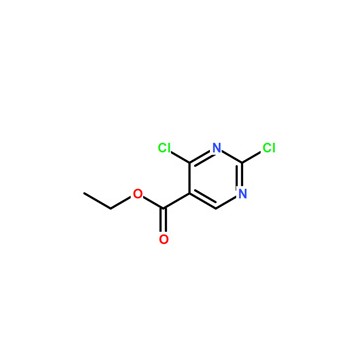
AJA0112A ethyl 2,4-dichloropyrimidine-5-carboxylate industrial grade CAS Number 51940-64-8 Molecular Formula C7H6Cl2N2O2 Molecular Weight 221.04 Package:25kg/barrel Function: medicine intermediates Application: medicine intermediates Tags: Anti Tumor.
Application: medicine intermediates.
*The following content is generated by AI and is for reference only.
Ethyl 2,4-dichloropyrimidine-5-carboxylate is a highly versatile heterocyclic building block widely utilized in medicinal chemistry and agrochemical research. With the molecular formula C7H6Cl2N2O2 and a CAS registry number of 100938-38-1, this compound serves as a critical precursor for synthesizing complex pyrimidine derivatives. The molecule features a pyrimidine ring substituted with two reactive chlorine atoms at the 2 and 4 positions and an ethyl ester group at the 5 position. This specific substitution pattern endows the compound with exceptional electrophilic character, allowing for diverse nucleophilic substitutions that are fundamental to constructing biologically active scaffolds.
In pharmaceutical development, this reagent is extensively employed to generate kinase inhibitors, antiviral agents, and anticancer drugs. The chlorine atoms can be readily displaced by various amines, thiols, or other nucleophiles under mild conditions, facilitating the rapid assembly of target molecules with high structural diversity. Furthermore, the ethyl ester moiety offers a convenient handle for further functionalization through hydrolysis to the corresponding carboxylic acid or reduction to primary alcohols, expanding its utility in multi-step synthesis pathways.
Beyond human medicine, Ethyl 2,4-dichloropyrimidine-5-carboxylate plays a significant role in the agricultural sector. It acts as a key intermediate in the production of novel herbicides and fungicides designed to combat resistant crop pathogens while maintaining environmental safety profiles. Its stability under standard storage conditions and solubility in common organic solvents like ethanol, dichloromethane, and dimethyl sulfoxide make it logistically favorable for industrial-scale manufacturing. Researchers value this compound for its cost-effectiveness and reliability in yielding high-purity intermediates. As a cornerstone in heterocyclic chemistry, it continues to drive innovation in drug discovery programs aimed at addressing unmet medical needs and enhancing global food security through advanced crop protection strategies.








![8,16-Diazadispiro[6.1.6.2]heptadecan-17-one](https://eimg.pharmasources.com/image/product/20250403/ca91cba8b87e53fc879f8d8764873a40jpg)
![6,8-Dioxo-5,7-diazaspiro[3.4]octane-2-carboxylic acid](https://eimg.pharmasources.com/image/product/20250403/02effeb5a7639bc84ff1f3add3c0c64fjpg)
![8-Oxa-1,3-diazaspiro[4.5]decane-2,4-dione](https://eimg.pharmasources.com/image/product/20250403/60fa7223d5a34f24138486ceea0ffb15jpg)



 (All Rights Reserved)