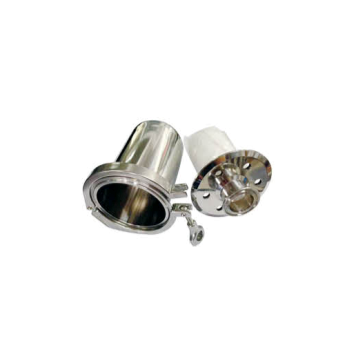
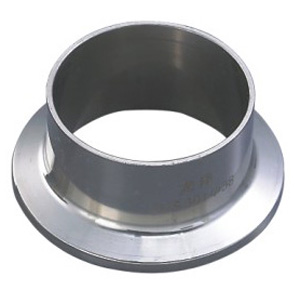
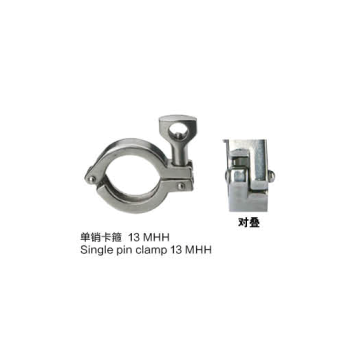
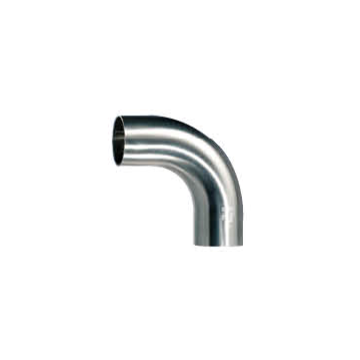
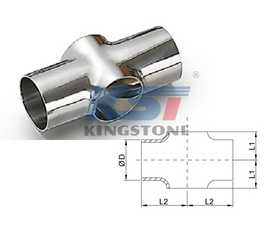
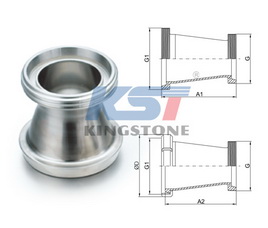
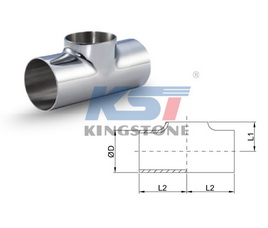
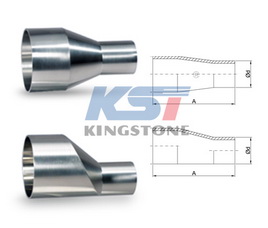
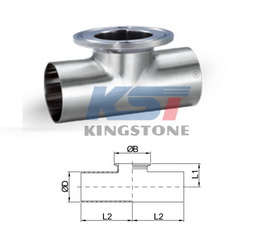
Size:1/2"-12",DN10-DN300,Φ19-305;
Standard: DIN, 3A, SMS, ISO,RJT
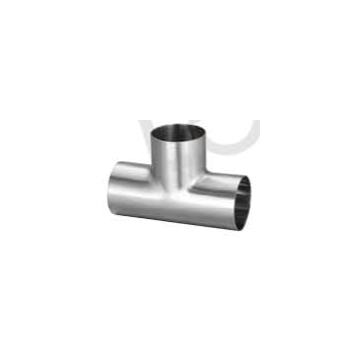
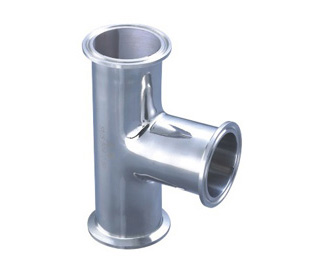
Connection: welded or clamped
Material: ASTM304, 316L;
Application: Dairy,beer,food,beverage,chemical,cosmetic,pharmaceutical, biological engineering industry, etc.;
Surface Treatment: Polished ID & OD, ID polished, OD polished, unpolished,tumbled;
Grit & Finish: 1. #240(Ra≤0.6μm) 2. #180(Ra≤0.8μm)
*The following content is generated by AI and is for reference only.
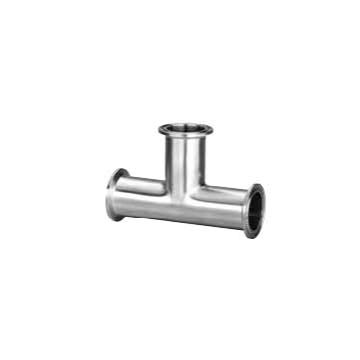
The term **"equal Tee welded / clamped"** refers to a specific type of pipe fitting or structural connection used in piping systems, HVAC, or industrial frameworks. Here is a breakdown of what this means and the differences between the two methods:
### 1. What is an "Equal Tee"?
* **Definition**: An Equal Tee is a three-way pipe fitting where all three openings (one inlet and two outlets) have the **same nominal diameter**.
* **Geometry**: It looks like the letter "T". The flow from the main run continues straight through, while a third branch connects at a 90-degree angle.
* **Usage**: Commonly used when you need to split a flow equally or combine flows from two lines into one, maintaining the same pipe size throughout.
### 2. Connection Methods: Welded vs. Clamped
The phrase "welded / clamped" describes the two primary ways these tees are installed or joined to the piping system.
#### A. Welded Equal Tee
This is the most permanent and robust method, standard in high-pressure, high-temperature, or hazardous fluid applications.
* **Process**: The tee is aligned with the pipes, and the joint is fused using arc welding (SMAW, GTAW/TIG, GMAW/MIG).
* **Characteristics**:
* **Seal**: Creates a leak-proof, monolithic joint.
* **Strength**: The joint strength equals or exceeds the pipe itself.
* **Permanence**: Cannot be easily disassembled; requires cutting for future maintenance.
* **Cost**: Higher labor cost due to skilled welders and inspection requirements (X-ray, ultrasonic testing).
* **Materials**: Typically used with Carbon Steel, Stainless Steel, or Alloy Steel pipes.
#### B. Clamped Equal Tee (Mechanical/Fastened)
This usually refers to a **mechanical coupling** or a specialized **grooved/quick-connect tee** rather than a traditional threaded or flanged tee.
* **Process**:
* **Grooved System**: The pipe ends are grooved, and a special "clamped" or "gasketed" tee (often called a Victaulic-style or mechanical tee) is placed over the joints. A housing and bolts clamp down on the gasket to create the seal.
* **Split Clamps**: In some structural or low-pressure contexts, a split-piece tee might be bolted around existing pipes.
* **Characteristics**:
* **Seal**: Relies on rubber gaskets compressed by the clamp.
* **Speed**: Very fast installation; no hot work permits required.
* **Flexibility**: Allows for slight misalignment and absorbs vibration.
* **Reusability**: Can be disassembled and reassembled easily for modifications.
* **Limitations**: Generally not suitable for extremely high pressures or temperatures compared to welded joints. The pressure rating depends on the gasket material and clamp design.
### Summary Comparison
| Feature | Welded Equal Tee | Clamped (Mechanical) Equal Tee |
| :--- | :--- | :--- |
| **Installation** | Requires welding equipment & skilled labor. | Requires grooving tool & wrenches; very fast. |
| **Leak Integrity** | Excellent (permanent fusion). | Good (depends on gasket condition). |
| **Maintenance** | Difficult (requires cutting). | Easy (unbolt and replace). |
| **Vibration** | Rigid (transmits vibration). | Dampens vibration (flexible gasket). |
| **Typical Use** | Process piping, steam, oil/gas, high pressure. | Fire sprinkler systems, water treatment, HVAC, temporary lines. |
### Conclusion
If you are selecting a component for a project:
* Choose **Welded** if the system involves high pressure, extreme temperatures, toxic fluids, or requires a permanent, zero-leak solution.
* Choose **Clamped** if speed of installation is critical, the system requires frequent maintenance/modification, or if hot-work permits are restricted.
*Note: If you are looking for a specific part number or manufacturer catalog data, please specify the material (e.g., SS304, Carbon Steel), schedule (wall thickness), and pressure rating required.*



 (All Rights Reserved)