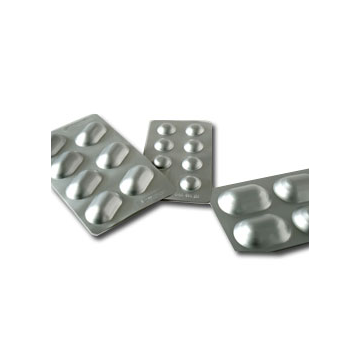
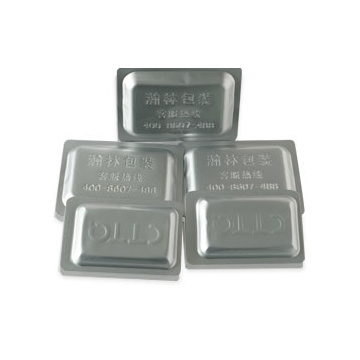
Product Description
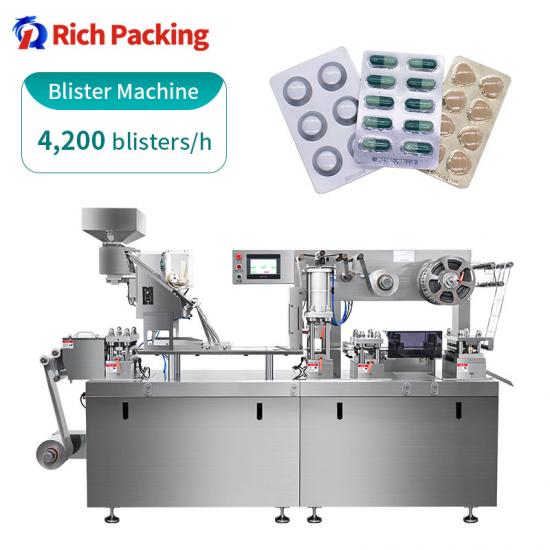
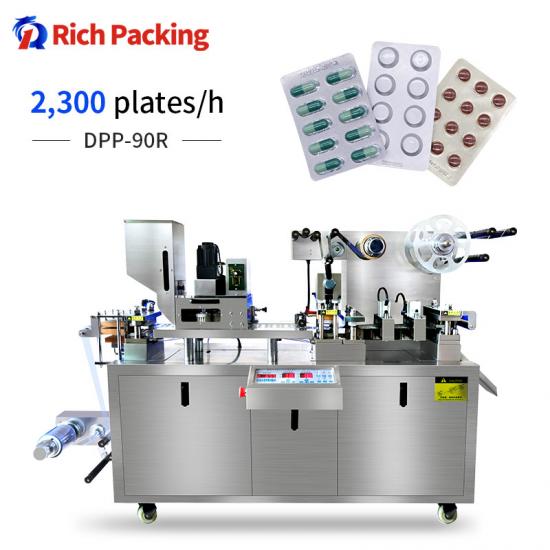
In the modern food industry, packaging is not only a part of product protection, but also an important part of interaction with consumers. Different food products put forward higher requirements for packaging technology due to their particularity and packaging requirements. In this context, the blister packaging machine has become an indispensable tool in the food industry with its wide range of applications and flexibility.
AI Product Description
*The following content is generated by AI and is for reference only.
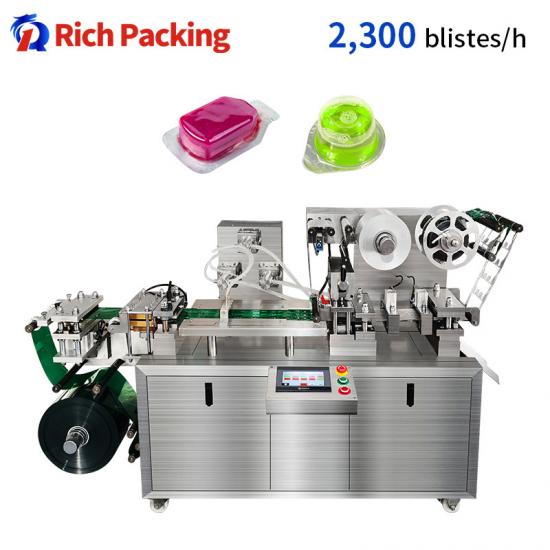
The DPP-100L Honey Blister Packing Machine is a specialized, high-efficiency packaging solution designed specifically for the viscous and sticky nature of honey products. As an advanced semi-automatic or fully automatic unit, its primary function is to form, fill, seal, and cut blister packs with precision, ensuring product integrity and hygiene throughout the process. Unlike standard blister machines, the DPP-100L incorporates heated forming cavities and specialized filling nozzles that prevent air entrapment and minimize dripping, which are common challenges when handling thick liquids like honey. The machine typically utilizes PVC/PP/PVDC materials to create individual sealed compartments, offering excellent barrier properties against moisture and oxygen, thereby extending the shelf life of the honey while maintaining its natural flavor and texture.
Operationally, this equipment is ideal for small to medium-sized production lines in food processing facilities, confectioneries, and pharmaceutical sectors dealing with similar viscosities. It features user-friendly interfaces for adjusting temperature, speed, and sealing pressure, allowing operators to customize settings based on different honey viscosities or container sizes. Key safety and maintenance protocols are essential for optimal performance. Operators must ensure the heating elements are at the correct temperature before loading raw materials to avoid material deformation or incomplete sealing. Regular cleaning of the filling nozzle and conveyor belt is critical to prevent sugar crystallization buildup, which can lead to mechanical jams or contamination. Furthermore, strict adherence to electrical safety guidelines is required, as the machine involves high-temperature components and moving parts. Proper lubrication of mechanical linkages and periodic inspection of pneumatic systems will significantly reduce downtime. By integrating these operational best practices, manufacturers can achieve consistent packaging quality, enhance production efficiency, and ensure compliance with international food safety standards, making the DPP-100L a reliable asset for modern honey packaging operations.





 (All Rights Reserved)