Capacity: 10-5000ml
Material: Borosilicate Glass
Socket Joint Size:14/20,19/22,24/40,29/42,34/45,45/50.
14/23,19/26,24/29,29/32
*The following content is generated by AI and is for reference only.
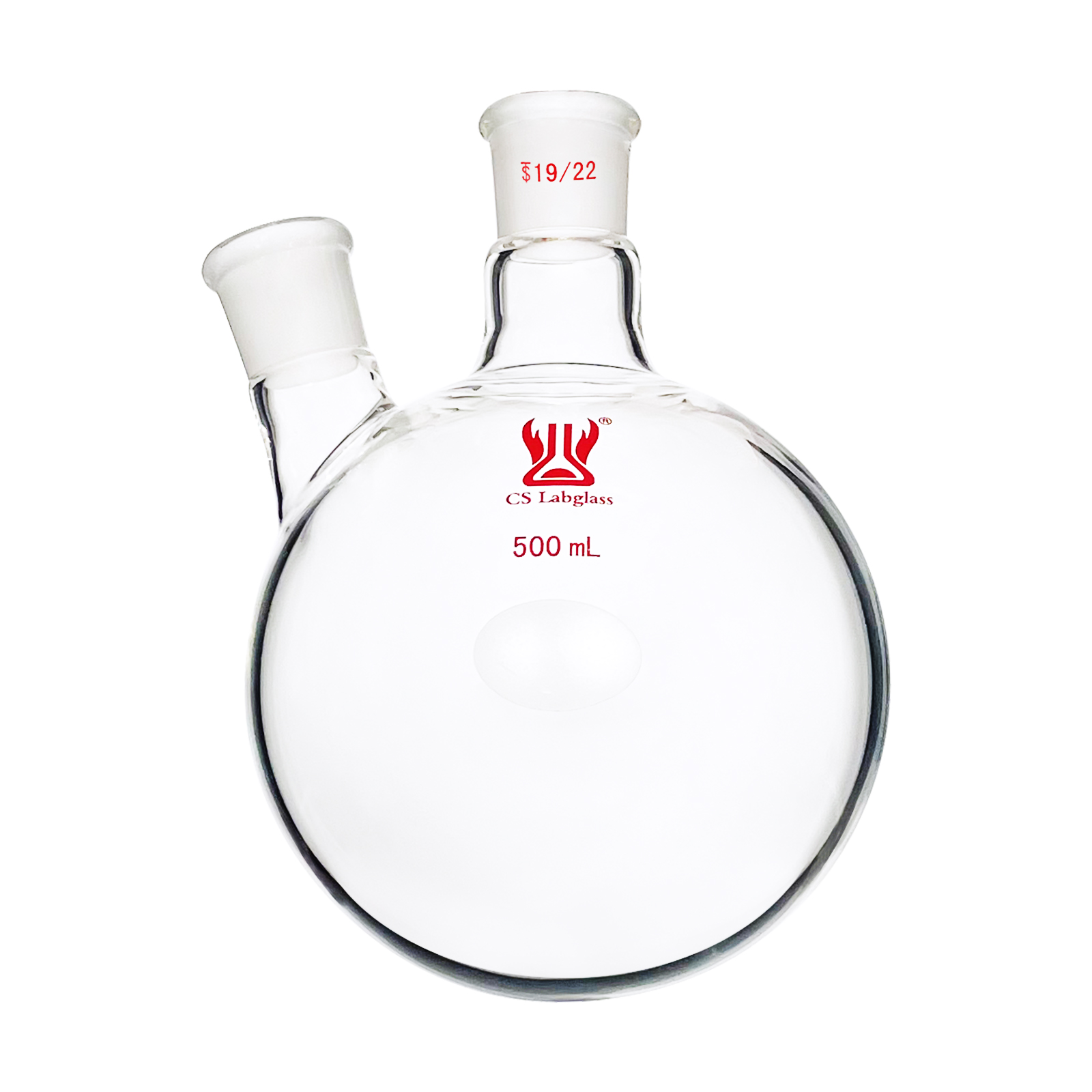
The Double Necks Round Bottom Glass Boiling Flask is a specialized piece of laboratory glassware designed for complex chemical processes requiring simultaneous input and output or multiple connection points. Its distinctive spherical bottom maximizes surface area for uniform heating, while the dual necks provide versatile access for condensers, thermometers, dropping funnels, or vacuum lines. This configuration is essential in applications such as fractional distillation, reflux reactions, and solvent recovery, where maintaining a closed system with precise control over vapor flow and reagent addition is critical.
Constructed from high-quality borosilicate glass, these flasks offer exceptional thermal shock resistance and chemical durability, allowing them to withstand rapid temperature changes and exposure to aggressive solvents without cracking or degrading. The round bottom shape ensures even heat distribution when used with heating mantles or oil baths, preventing localized hot spots that could lead to sample decomposition or dangerous pressure buildups. Unlike single-neck variants, the double-neck design enhances operational flexibility, enabling researchers to set up intricate apparatuses without needing additional adapters that might compromise seal integrity.
Safety remains paramount when utilizing this equipment. Users must always ensure all joints are properly greased and clamped securely to prevent leaks or disconnections under vacuum or pressure. Heating should be performed gradually using appropriate supports; direct flame contact is strictly prohibited due to the risk of thermal stress fractures. Additionally, the flask must never be heated when empty or containing volatile substances beyond its rated capacity, as this can cause explosive failure. After use, thorough cleaning is required to remove any residue that could contaminate future experiments or weaken the glass structure. Proper handling, storage in padded racks, and regular inspection for chips or cracks are necessary to maintain safety and longevity. Whether for educational demonstrations or advanced industrial research, this versatile tool facilitates efficient, controlled, and safe chemical synthesis and analysis across diverse scientific disciplines.





 (All Rights Reserved)