We has been focusing on the R&D and production of optoelectronic materials for more than ten years, including OLED materials and perovskite materials .ThIis block can be used in the pharmaceutical and OLED industries
*The following content is generated by AI and is for reference only.
Dibenzothiophene-2-boronic acid is a specialized organoboron compound widely utilized in advanced organic synthesis, particularly within the pharmaceutical and materials science sectors. With the chemical formula C12H9BO2S and the CAS Registry Number 136547-84-1, this white to off-white crystalline solid serves as a critical building block for constructing complex heterocyclic architectures. Its molecular structure features a dibenzothiophene core substituted with a boronic acid group at the second position, offering unique electronic and steric properties that distinguish it from simpler aromatic boronic acids.
The primary application of Dibenzothiophene-2-boronic acid lies in palladium-catalyzed cross-coupling reactions, most notably the Suzuki-Miyaura coupling. In this versatile reaction, the boronic acid moiety reacts efficiently with various aryl or vinyl halides to form new carbon-carbon bonds. This capability is indispensable for synthesizing conjugated polymers used in organic light-emitting diodes (OLEDs), organic field-effect transistors (OFETs), and solar cells, where high charge carrier mobility and stability are paramount. Furthermore, the presence of the sulfur atom in the dibenzothiophene framework often enhances the thermal stability and luminescent properties of the resulting materials, making them ideal candidates for next-generation optoelectronic devices.
Beyond material science, this reagent plays a significant role in medicinal chemistry. Researchers employ it to introduce specific thiophene-containing motifs into drug candidates, potentially improving metabolic stability or binding affinity to biological targets. The compound is generally stable under standard laboratory conditions but should be handled with care to prevent moisture-induced degradation, which can reduce its coupling efficiency. Commercially available in high purity grades, Dibenzothiophene-2-boronic acid is a staple reagent for chemists seeking to expand the structural diversity of sulfur-containing aromatic systems. Its reliability in forming biaryl linkages ensures consistent results in both academic research and industrial scale-up processes, cementing its status as an essential tool in modern synthetic methodology.

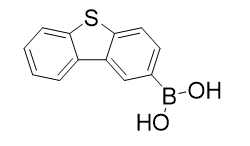




 (All Rights Reserved)
![(6-phenyldibenzo[b,d]thiophen-4-yl)boronic acid](https://eimg.pharmasources.com/image/20250918/VzkRtcz9igDw870AqZ3zYo3SOO3IOeqwh9VdEbLS.png)
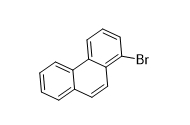
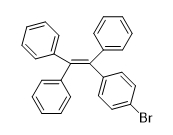

![[1,1':4',1''-Terphenyl]-2,6-diol, 2'-fluoro-](https://eimg.pharmasources.com/image/20240314/BTJGUNOZ2gmyX3HLfV4HO89Qpi7WQfGsPD1Qh3Az.jpeg)
![Ethyl 5-methylbenzo[b]thiophene-2-carboxylate](https://eimg.pharmasources.com/image/product/20250919/bd4b4317408ace91b597157b395c106bjpg)
![3-Bromo-5-tert-butylbenzo[b]thiophene](https://eimg.pharmasources.com/image/product/20250919/742a9f6c2521018bdd155a4ef08a8873jpg)
![3-Iodo-5-tert-butylbenzo[b]thiophene](https://eimg.pharmasources.com/image/product/20250919/370cd976e4b82e45e310eab5fdf6b1f1jpg)



![5-Hydroxy-3,9-dimethyl-7H-benzo[c]fluoren-7-one](https://eimg.pharmasources.com/image/product/20250919/d01931f02fb1e7e8231c9933d73e3837jpg)
