CAS Number: 872728-81-9
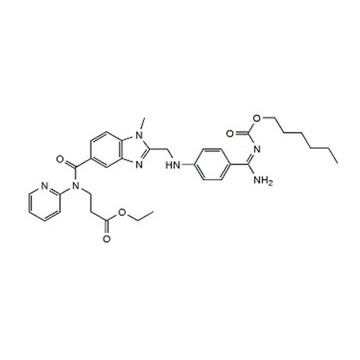
Chemical Name: N-[2-[4-[N-(Hexyloxycarbonyl)amidino] phenylaminomethyl]-1-methyl-1H-benzimidazol-5-ylcarbonyl]-N-(2-pyridyl)-beta-alanine ethyl ester methanesulfonate
Molecular Formula: C34H41N7O5.CH4O3S
Molecular Weight: 723.84
Structure:
Specification:In-house
Documentation/Status:R&D
Contract Manufacturing:CMO
*The following content is generated by AI and is for reference only.
Dabigatran Etexilate Mesylate, identified by the CAS number 872728-81-9, is a potent oral anticoagulant and a prodrug of dabigatran. Its molecular formula is C28H40N6O5S·CH4O3S, reflecting its complex structure comprising the active moiety linked to an ethoxycarbonyl group for improved bioavailability. This compound functions as a direct thrombin inhibitor, specifically targeting free and clot-bound thrombin, thereby preventing the conversion of fibrinogen to fibrin and inhibiting platelet aggregation. As a mesylate salt, it offers enhanced stability and solubility compared to its base form, facilitating efficient formulation into oral capsules or tablets. Clinically, Dabigatran Etexilate Mesylate serves as a critical therapeutic agent for stroke prevention in patients with non-valvular atrial fibrillation, treatment of deep vein thrombosis (DVT), and pulmonary embolism (PE). It also plays a vital role in prophylaxis against venous thromboembolism following hip or knee replacement surgeries. Unlike traditional vitamin K antagonists like warfarin, this agent does not require routine monitoring of international normalized ratio (INR) levels, offering a more predictable pharmacokinetic profile. The drug undergoes rapid hydrolysis by esterases in the liver and intestinal wall to release dabigatran, the active inhibitor. Its onset of action is relatively quick, allowing for flexible dosing schedules without the need for bridging therapy with heparin. While generally well-tolerated, clinicians must remain vigilant regarding bleeding risks, particularly in elderly patients or those with renal impairment, as the drug is primarily excreted unchanged via the kidneys. The development of this molecule marked a significant advancement in anticoagulation therapy, providing a safer alternative with fewer drug-drug interactions and dietary restrictions associated with older agents. Ongoing research continues to explore its efficacy in broader cardiovascular indications, solidifying its status as a cornerstone medication in modern hematology and cardiology practices worldwide.





 (All Rights Reserved)