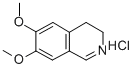
purity >98.5%
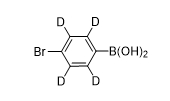
D ratio>98%
powder,
Cas: 1932697-87-4
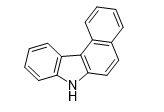
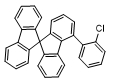
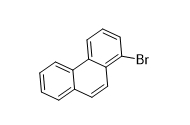
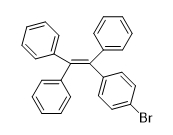
the iintermediate can be used in pharmaceutical synthesis and Oled materials synthesis.
We researched & produced oled more than ten years. We provide simiilar OLED structure customization.
*The following content is generated by AI and is for reference only.
4-(4-Bromophenyl)boronic acid is a versatile organoboron compound widely utilized in modern organic synthesis, particularly within the realm of cross-coupling reactions. Its molecular formula is C₆H₆BBrO₂, and it carries the CAS Registry Number 2809-13-6. This white to off-white crystalline solid serves as a crucial building block for constructing complex biaryl structures, which are fundamental motifs found in numerous pharmaceutical agents, agrochemicals, and advanced materials.
The primary application of this reagent lies in Suzuki-Miyaura coupling, a palladium-catalyzed reaction that forms carbon-carbon bonds between aryl halides and boronic acids. Due to its high stability and ease of handling compared to other organoboron species, 4-(4-bromophenyl)boronic acid is preferred for synthesizing conjugated polymers used in organic light-emitting diodes (OLEDs), photovoltaic cells, and field-effect transistors. In medicinal chemistry, it acts as an essential intermediate for creating kinase inhibitors, anti-inflammatory drugs, and other bioactive molecules containing biphenyl or heteroaryl frameworks. The presence of the bromine atom on the phenyl ring allows for further functionalization, enabling chemists to introduce diverse substituents through subsequent metal-catalyzed transformations.
Furthermore, this compound exhibits excellent solubility in common organic solvents such as ethanol, methanol, and dimethyl sulfoxide, facilitating its use in various reaction conditions. It is generally stable under standard laboratory storage but should be kept away from moisture to prevent hydrolysis. Researchers value this reagent not only for its reactivity but also for its cost-effectiveness and commercial availability in high purity grades. As the demand for novel functional materials and targeted therapeutics grows, the role of 4-(4-bromophenyl)boronic acid remains indispensable in both academic research and industrial manufacturing processes, bridging the gap between simple starting materials and sophisticated molecular architectures. Its contribution to green chemistry is notable, often allowing reactions to proceed under milder conditions with fewer byproducts compared to traditional methods.





 (All Rights Reserved)
![(6-phenyldibenzo[b,d]thiophen-4-yl)boronic acid](https://eimg.pharmasources.com/image/20250918/VzkRtcz9igDw870AqZ3zYo3SOO3IOeqwh9VdEbLS.png)

![[1,1':4',1''-Terphenyl]-2,6-diol, 2'-fluoro-](https://eimg.pharmasources.com/image/20240314/BTJGUNOZ2gmyX3HLfV4HO89Qpi7WQfGsPD1Qh3Az.jpeg)

![Diethyl-2-acetamido-2-(7-chloro-5-(2-fluorophenyl)-3H- benzo[e][1,4]diazepin-2-yl)malonate](https://eimg.pharmasources.com/image/20240603/kCK1tVKXvO7mdpLTBNii5x61NUulXBiqHBf6clcn.png)