Product Description
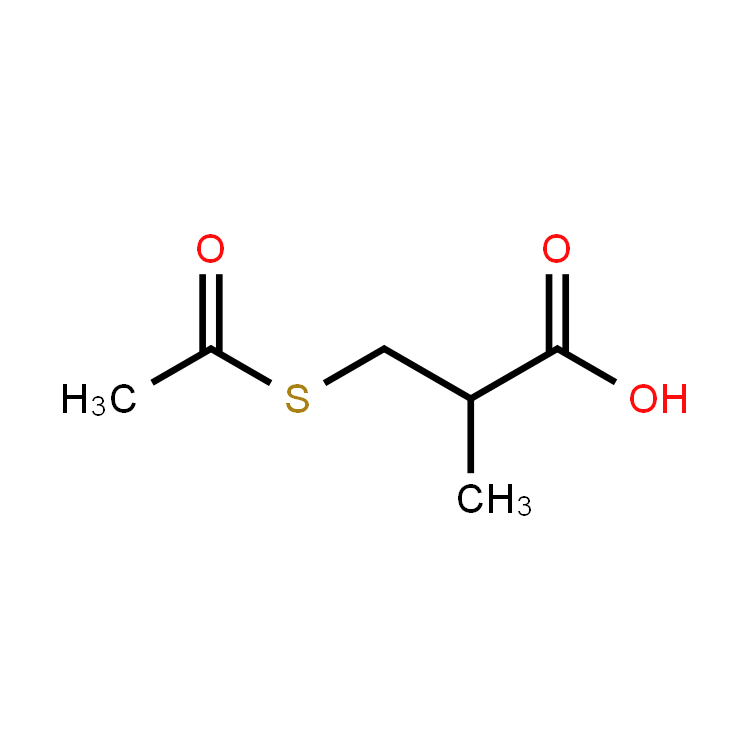
D-3-Acetylsulfanyl-2-methyl-propionic acid、76497-39-7
AI Product Description
*The following content is generated by AI and is for reference only.
D-3-Acetylsulfanyl-2-methyl-propionic acid is a specialized chiral organic compound belonging to the class of substituted propionic acids. Its molecular formula is C6H10O3S, reflecting a structure composed of six carbon atoms, ten hydrogen atoms, three oxygen atoms, and one sulfur atom. The molecule features a methyl group at the second position and an acetylsulfanyl (thioacetate) moiety at the third position, with a specific stereochemical configuration denoted by the "D-" prefix, indicating its optical activity and chirality. While specific CAS registry numbers for this exact enantiomer may vary depending on commercial cataloging or might be listed under broader parent compounds in some databases, it is structurally related to derivatives used in asymmetric synthesis.
This compound serves as a critical intermediate in the pharmaceutical and agrochemical industries, particularly in the development of optically active building blocks. Due to its chiral nature, it is frequently employed in the synthesis of complex biologically active molecules where stereochemistry dictates biological efficacy. Researchers utilize such thioester-functionalized acids as precursors for constructing beta-lactams, which are essential components of penicillin and cephalosporin antibiotics, or as ligands in transition metal-catalyzed asymmetric reactions. The presence of the sulfur atom allows for versatile chemical transformations, including hydrolysis to yield free thiols or reduction to generate sulfides, thereby expanding its utility in multi-step organic synthesis pathways.
Furthermore, D-3-acetylsulfanyl-2-methyl-propionic acid finds applications in materials science, potentially contributing to the creation of novel polymers or functionalized surfaces requiring specific chiral interactions. Its stability and reactivity profile make it suitable for high-precision laboratory research aimed at understanding structure-activity relationships in drug discovery. As a high-value specialty chemical, it is typically supplied to academic institutions and R&D departments within major pharmaceutical corporations rather than being available for general consumer use. Strict quality control measures ensure the enantiomeric purity required for effective application in stereoselective synthesis. Overall, this molecule represents a vital tool for chemists striving to develop next-generation therapeutics and advanced functional materials through precise molecular engineering.





 (All Rights Reserved)
![8-Oxa-1,3-diazaspiro[4.5]decane-2,4-dione](https://eimg.pharmasources.com/image/product/20250403/60fa7223d5a34f24138486ceea0ffb15jpg)
![6,8-Dioxo-5,7-diazaspiro[3.4]octane-2-carboxylic acid](https://eimg.pharmasources.com/image/product/20250403/02effeb5a7639bc84ff1f3add3c0c64fjpg)


![8,16-Diazadispiro[6.1.6.2]heptadecan-17-one](https://eimg.pharmasources.com/image/product/20250403/ca91cba8b87e53fc879f8d8764873a40jpg)