Product Description
[Cu(L-5-HTP)2Cl2] Coordination compounds of copper(ll) with L-5-hydroxytryptophanType : Herbal Extract
Variety :griffonia seed extract
Appearance : brown powder
Part : seed
Extraction method : Solvent Extraction
Packing : Bottle , Drum , Vaccum Packed
Grade : medicine grade
Molecular formula : C22H24N4O6Cl2Co
Purity : 98.5%
Function : Anti obesity API
Contact US :
Trading Manger : Helen Tan
Whatsapp :+86 13930229229
Website : www.blrhbio.com
AI Product Description
*The following content is generated by AI and is for reference only.
The coordination compound [Cu(L-5-HTP)₂Cl₂], chemically identified as Copper(II) bis(L-5-hydroxytryptophan) dichloride, represents a significant class of bio-inorganic complexes bridging transition metal chemistry and neurotransmitter biology. Its molecular formula is C₂₂H₂₄Cl₂CuN₄O₆, reflecting the stoichiometric assembly of one divalent copper ion coordinated with two molecules of L-5-hydroxytryptophan (L-5-HTP) and two chloride anions to maintain charge balance. While a specific CAS Registry Number for this exact discrete complex is not widely indexed in standard commercial databases compared to its free ligand components, it is distinct from simple copper salts or pure L-5-HTP supplements due to its unique coordination geometry and stability profile.
This compound serves primarily as a sophisticated model system in medicinal inorganic chemistry and pharmacological research. The incorporation of L-5-HTP, a crucial metabolic precursor to serotonin, into a copper coordination sphere offers researchers a unique platform to investigate metal-neurotransmitter interactions. In biological systems, copper ions play vital roles in enzymatic functions and redox processes; however, their interaction with indoleamine derivatives like 5-HTP can influence oxidative stress pathways and cellular signaling mechanisms. Consequently, [Cu(L-5-HTP)₂Cl₂] is utilized in studies aiming to elucidate the structural basis of metal-induced modulation of serotonergic activity.
Beyond fundamental research, potential applications extend to the development of novel therapeutic agents targeting neurodegenerative disorders where copper dyshomeostasis and serotonin deficits are concurrent issues. By stabilizing the active conformation of L-5-HTP through chelation, such complexes may exhibit altered bioavailability or reduced toxicity profiles compared to uncoordinated forms. Furthermore, these materials are valuable for exploring structure-activity relationships (SAR) in drug design, helping scientists understand how ligand field effects impact biological efficacy. Although currently more prevalent in academic laboratory settings than in mass-market pharmaceuticals, ongoing investigations into its cytotoxicity, antioxidant capacity, and receptor binding affinity suggest a promising future in targeted drug delivery systems. As research progresses, this complex may contribute significantly to understanding the interplay between essential metals and neurotransmitter synthesis, offering new avenues for treating mood disorders and neurological conditions.

![[Cu(L-5-HTP)2Cl2] Coordination compounds of copper(ll) with L-5-hydroxytryptophan,C22H24N4O6Cl2Cu](https://eimg.pharmasources.com/image/product/20200619/4b9e0c39c2119b6385b30c1444bbcfc1jpg)
![[Cu(L-5-HTP)2Cl2] Coordination compounds of copper(ll) with L-5-hydroxytryptophan,C22H24N4O6Cl2Cu](https://eimg.pharmasources.com/image/product/20200619/8a4ac1f53e7eae4f43299893d8fe7157jpg)

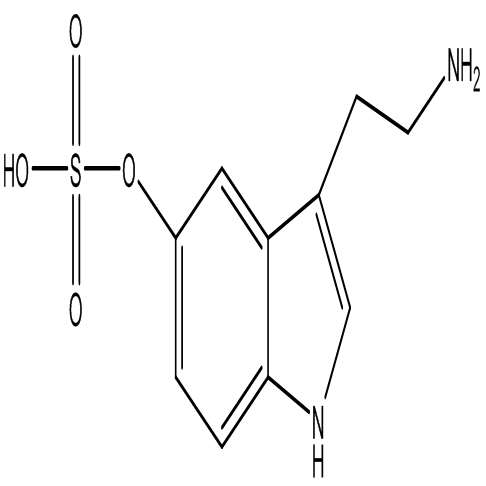
![benzyl-N-[2-(5-hydroxy-1H-indol-3-yl)]carbamate,CAS:53157-50-10](https://eimg.pharmasources.com/image/product/20200619/d2cc2c1ed1aacb4b50276ca2a7970df2jpg)



 (All Rights Reserved)