Product Description
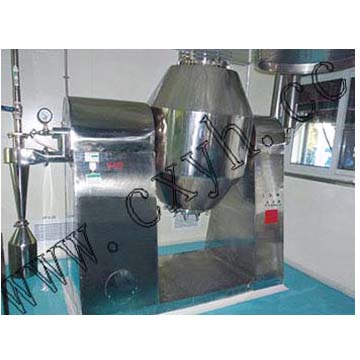
| Our product SZG double cone rotary vacuum dryer is suitable for the drying of heat sensitive, low temperature, powdery or granular materials in chemical, pharmaceutical, food, pesticide industry. |
AI Product Description
*The following content is generated by AI and is for reference only.
A **Cone Vacuum Rotary Dryer** (often simply called a Cone Vacuum Dryer) is a specialized industrial drying equipment designed to remove moisture from heat-sensitive, toxic, or explosive materials under vacuum conditions. Unlike standard rotary dryers that operate at atmospheric pressure, this unit combines the continuous motion of a rotating drum with the low-pressure environment of a vacuum system to achieve efficient drying at lower temperatures.
Here is a detailed breakdown of its working principle, key features, applications, and advantages:
### 1. Working Principle
The core mechanism involves two simultaneous actions:
* **Mechanical Agitation:** The material is fed into a conical or cylindrical vessel that rotates slowly. Internal baffles or lifters inside the vessel ensure the material is continuously tumbled and mixed, exposing fresh surfaces to the heating medium.
* **Vacuum Environment:** The vessel is sealed and connected to a vacuum pump. This lowers the boiling point of water (and other solvents) within the material. Consequently, moisture evaporates at significantly lower temperatures than it would at atmospheric pressure.
* **Heat Transfer:** Heat is typically transferred via a jacket surrounding the vessel (heated by steam, hot oil, or thermal fluid) or through internal heated coils. The vacuum allows for rapid evaporation without degrading the product.
### 2. Key Features & Design Characteristics
* **Conical Shape:** Many designs feature a conical bottom to facilitate complete discharge of the dried material and prevent "dead zones" where material might accumulate.
* **Low Temperature Operation:** Capable of drying materials at temperatures ranging from ambient up to ~200°C (depending on the heating medium), making it ideal for thermolabile substances.
* **Closed System:** The entire process occurs in a closed loop, preventing the release of dust, odors, or volatile organic compounds (VOCs) into the atmosphere.
* **Solvent Recovery:** Since the vapor generated is collected under vacuum, solvents can be easily condensed and recovered using a condenser, which is crucial for cost savings and environmental compliance.
* **Oxygen Exclusion:** By maintaining a vacuum, the oxygen level inside the dryer is minimized, reducing the risk of oxidation or explosion for combustible materials.
### 3. Primary Applications
This equipment is widely used in industries where product quality, safety, and solvent recovery are critical:
* **Pharmaceuticals:** Drying antibiotics, enzymes, vitamins, and active pharmaceutical ingredients (APIs) that degrade at high heat.
* **Chemicals:** Processing pigments, dyes, resins, and catalysts.
* **Food Industry:** Dehydrating fruit powders, milk powder, and spices while preserving flavor and nutrients.
* **Fine Chemicals & Polymers:** Handling polymers, plastics, and specialty chemicals that require strict control over particle size and moisture content.
* **Waste Treatment:** Drying hazardous sludge or toxic waste for safe disposal or recycling.
### 4. Advantages vs. Traditional Dryers
| Feature | Cone Vacuum Rotary Dryer | Traditional Hot Air/Atmospheric Dryer |
| :--- | :--- | :--- |
| **Drying Temp** | Low (prevents degradation) | High (risk of burning/degradation) |
| **Safety** | High (low oxygen, no dust explosion risk) | Lower (dust and fire hazards) |
| **Solvent Recovery** | Excellent (closed loop) | Poor or requires complex scrubbers |
| **Environmental Impact** | Minimal emissions | High dust/VOC emissions |
| **Product Quality** | Preserves color, odor, and activity | Can alter physical properties |
### 5. Considerations
While highly effective, there are some trade-offs to consider:
* **Capital Cost:** The equipment is more expensive due to the need for vacuum pumps, sealed vessels, and robust heating systems.
* **Maintenance:** The sealing mechanisms (gaskets, shaft seals) require regular maintenance to maintain the vacuum integrity.
* **Capacity:** Generally, the throughput per unit volume may be lower compared to large-scale atmospheric rotary dryers, though they excel in batch processing or high-value small-batch production.
If you are looking for specific technical specifications (such as capacity, power requirements, or custom configurations) or need help selecting a supplier, please provide details about your **material type**, **moisture content**, and **production scale**.





 (All Rights Reserved)