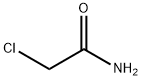
2-Chloroacetamide is a preservative used as a herbicide in dryland and paddy fields. 2-Chloroacetamide is a fungicide used in agriculture, adhesives, paints, and coatings. 2-Chloroacetamide can inhibit ultra long chain fatty acid elongation enzyme.
E-mail: specialchem5@ichemie
*The following content is generated by AI and is for reference only.
Chloroacetamide, chemically designated as 2-chloroacetamide, is a versatile organic compound widely utilized in industrial chemistry and pharmaceutical synthesis. Its molecular formula is C₂H₄ClNO, and it bears the CAS Registry Number 79-04-7. This white to off-white crystalline solid is highly soluble in water and common polar solvents, making it an ideal reagent for various chemical transformations. The compound features a reactive chloroacetyl group attached to an amide functionality, which drives its extensive application profile.
In the agricultural sector, chloroacetamide serves as a critical intermediate in the production of herbicides. Specifically, it is a key building block for synthesizing acetamide-based herbicides such as alachlor, acetochlor, and metolachlor, which are extensively used to control broadleaf weeds and grasses in corn, soybean, and cotton fields. These herbicides help ensure high crop yields by suppressing unwanted vegetation without harming the primary crops when applied according to guidelines.
Beyond agriculture, this compound plays a significant role in the pharmaceutical industry. It acts as a fundamental precursor for synthesizing various nitrogen-containing heterocycles and drug candidates. Researchers utilize chloroacetamide to introduce amide linkages or to construct complex ring systems essential for developing antibiotics, analgesics, and other therapeutic agents. Its reactivity allows for nucleophilic substitution reactions, facilitating the creation of diverse molecular architectures.
Furthermore, chloroacetamide finds niche applications in polymer chemistry and dye manufacturing. It can be employed to modify polymer properties or synthesize specific dyes with unique color characteristics. However, handling this substance requires strict safety protocols. As a potential skin irritant and harmful if swallowed, it must be managed with appropriate personal protective equipment (PPE) in well-ventilated areas. Regulatory bodies classify it as a hazardous material due to its toxicity profile. Despite these risks, its efficiency as a synthetic intermediate ensures its continued demand across multiple high-value industries, bridging the gap between basic chemical feedstocks and advanced end-products in modern science and agriculture.



 (All Rights Reserved)

![8,16-Diazadispiro[6.1.6.2]heptadecan-17-one](https://eimg.pharmasources.com/image/product/20250403/ca91cba8b87e53fc879f8d8764873a40jpg)
![8-Oxa-1,3-diazaspiro[4.5]decane-2,4-dione](https://eimg.pharmasources.com/image/product/20250403/60fa7223d5a34f24138486ceea0ffb15jpg)
![6,8-Dioxo-5,7-diazaspiro[3.4]octane-2-carboxylic acid](https://eimg.pharmasources.com/image/product/20250403/02effeb5a7639bc84ff1f3add3c0c64fjpg)
