Important steric silicone protectants, mainly used to protect various types of hydroxyl groups, especially in polyfunctional hydroxyl compounds, can be selectively protected and deprotected for nucleoside, nucleotide and carbohydrate synthesis
*The following content is generated by AI and is for reference only.
(Bromoethynyl)triisopropylsilane is a specialized organosilicon reagent widely utilized in modern organic synthesis, particularly within the field of medicinal chemistry and materials science. Its molecular formula is C9H17BrSi, and it is identified by the CAS Registry Number 84652-30-6. This compound features a bromoalkyne moiety attached to a triisopropylsilyl (TIPS) group, creating a unique structure that balances high reactivity with significant steric protection. The TIPS group serves as a robust silyl protecting group for terminal alkynes, offering superior stability against various acidic and basic conditions compared to smaller silyl groups like trimethylsilyl (TMS).
The primary application of (Bromoethynyl)triisopropylsilane lies in its role as a key building block for Sonogashira cross-coupling reactions. In these palladium-catalyzed transformations, the bromine atom acts as an excellent leaving group, allowing the alkyne unit to couple efficiently with aryl or vinyl halides. This process is fundamental for constructing complex conjugated systems, such as polyynes, enediynes, and functionalized aromatic frameworks found in bioactive natural products and pharmaceutical agents. Furthermore, the bulky isopropyl groups provide exceptional steric hindrance, which helps prevent unwanted side reactions and ensures high regioselectivity during coupling processes.
In addition to cross-coupling, this reagent is valuable for introducing protected ethynyl functionalities into molecular scaffolds. Once the desired carbon-carbon bond is formed, the TIPS group can be selectively removed using fluoride sources, such as tetrabutylammonium fluoride (TBAF), to reveal a terminal alkyne for further derivatization. This two-step strategy—protection, coupling, and deprotection—is a standard protocol in multi-step total synthesis. Researchers also employ this molecule in the development of novel optical materials and conductive polymers due to the linear geometry of the alkyne linkage. Overall, (Bromoethynyl)triisopropylsilane represents an essential tool for chemists seeking precise control over molecular architecture, enabling the efficient synthesis of sophisticated chemical entities with high purity and yield.
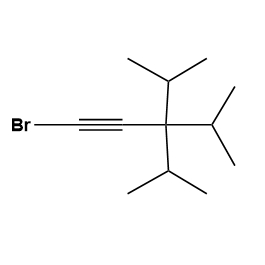



 (All Rights Reserved)

![Diethyl-2-acetamido-2-(7-chloro-5-(2-fluorophenyl)-3H- benzo[e][1,4]diazepin-2-yl)malonate](https://eimg.pharmasources.com/image/20240603/kCK1tVKXvO7mdpLTBNii5x61NUulXBiqHBf6clcn.png)