Product Description
| Appearance |
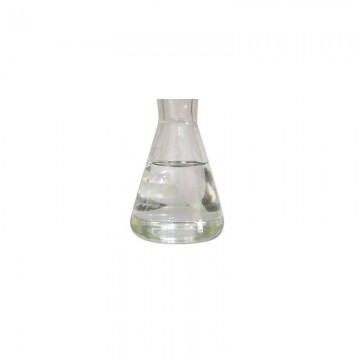
Transparent Liquid |
| Content(%) |
99.0 min |
| Density 20℃, kg/m3 |
1044-1049 |
| Acidity ( As Benzoic Acid,%) |
1.0 max |
| Color(Hazen) |
50 max |
| Chloride(ppm) |
500 max |
| Specific Gravity 20℃, kg/m3 |
1.044-1.049 |
AI Product Description
*The following content is generated by AI and is for reference only.
Benzaldehyde, often referred to as the simplest aromatic aldehyde, is a fundamental chemical intermediate with a rich history and diverse industrial applications. Its molecular formula is C₇H₆O, reflecting its structure of a benzene ring attached to a formyl group. The substance is widely recognized by its unique CAS number, 100-52-7, which serves as its universal identifier in global chemical databases and regulatory frameworks. At room temperature, pure benzaldehyde appears as a colorless to slightly yellow liquid, distinguished by its characteristic almond-like aroma, which has made it a staple in both the food and fragrance industries for centuries.
In terms of production, while trace amounts occur naturally in bitter almonds, apricot kernels, and peach pits, the vast majority of commercial benzaldehyde is synthesized through the oxidation of toluene or via the hydrolysis of benzal chloride. This synthetic route ensures a consistent supply that meets the stringent purity requirements of modern manufacturing sectors. Its primary utility lies in its role as a versatile building block for synthesizing other valuable compounds. In the pharmaceutical industry, it is a crucial precursor for the manufacture of dyes, perfumes, and various active pharmaceutical ingredients (APIs), including antihistamines and antibiotics.
Beyond pharma, benzaldehyde is extensively utilized in the flavoring sector. It provides the signature almond taste and scent found in numerous confectioneries, baked goods, beverages, and liqueurs. Furthermore, it serves as an essential solvent and reagent in organic synthesis laboratories, facilitating reactions such as the Perkin reaction to produce cinnamic acid derivatives. Safety protocols are paramount when handling this chemical; while generally safe in low concentrations used for flavoring, it can be irritating to the skin, eyes, and respiratory system in higher concentrations. Proper ventilation and protective equipment are recommended during industrial processing. Overall, benzaldehyde remains an indispensable commodity in the global chemical market, bridging the gap between natural aromatics and complex synthetic chemistry.





 (All Rights Reserved)