Product Description
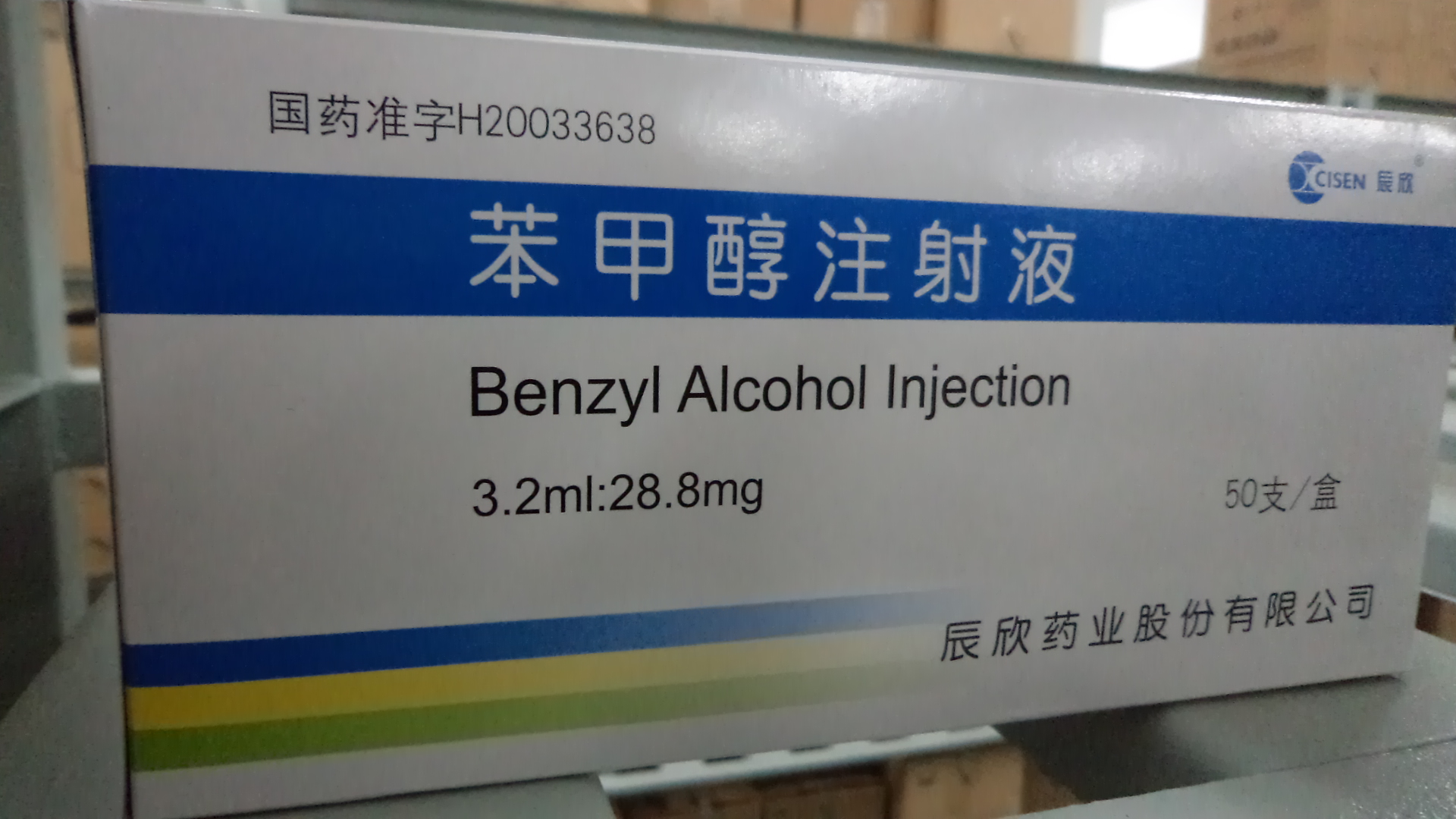
This product is an antiparasitic drug, has the effect of killing lice and insect, local analgesia and antisepsis. Clinically, it is mainly used to treat head lice infection in patients older than 6 months. It is also used for local analgesia and anti-corrosion of preparations (many injections contain this product). The main mechanism of benzyl alcohol is to inhibit the closure of the breathing stomata of lice, obstruct the stomata, and lead to suffocation and death of lice.
3.2ml:28.8mg
AI Product Description
*The following content is generated by AI and is for reference only.
Benzyl Alcohol Injection is a multifunctional pharmaceutical agent primarily utilized as a preservative and local anesthetic in various parenteral formulations. Its most critical role involves preventing microbial contamination in multi-dose vials of medications, thereby ensuring sterility during repeated use. Beyond preservation, it serves as a potent local anesthetic when administered intramuscularly or subcutaneously, providing temporary relief from pain associated with injections containing irritating substances. Historically, it has also been employed as a solvent for poorly water-soluble drugs to enhance their bioavailability.
However, the use of Benzyl Alcohol Injection requires strict adherence to safety protocols due to significant toxicity concerns, particularly in vulnerable populations. The most notable warning pertains to neonates and premature infants. In this demographic, benzyl alcohol can accumulate rapidly because their metabolic pathways are immature, leading to a condition known as "gasping syndrome." This life-threatening complication is characterized by central nervous system depression, metabolic acidosis, respiratory distress, and potentially fatal outcomes. Consequently, regulatory agencies globally advise against using any formulation containing benzyl alcohol for newborns unless no safer alternative exists.
For adult patients, the primary precautions involve monitoring for hypersensitivity reactions, which may manifest as skin rashes, swelling, or anaphylaxis. Although rare, systemic absorption can lead to dizziness, nausea, or hypotension if large volumes are administered. Clinicians must calculate dosages carefully to avoid exceeding safe limits, typically keeping concentrations below 0.9% in final preparations where possible. Furthermore, it should be used with caution in patients with compromised liver or kidney function, as these organs are responsible for metabolizing and excreting the compound. Proper administration techniques are essential to minimize tissue irritation at the injection site. Ultimately, while Benzyl Alcohol Injection remains a valuable tool in pharmaceutical compounding and clinical practice, its application demands rigorous patient assessment and vigilant monitoring to mitigate serious adverse effects.





 (All Rights Reserved)