Product Description
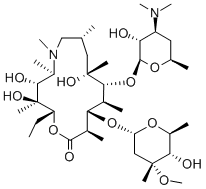
Azithromycin is a widely used antibiotic drug in clinical practice, with advantages such as a wide antibacterial spectrum, minimal irritation to the gastrointestinal tract, and fast oral absorption. It is used in both adults and children.
E-mail:specialchem5@ichemie.com
AI Product Description
*The following content is generated by AI and is for reference only.
Azithromycin is a widely prescribed macrolide antibiotic belonging to the azalide subclass, characterized by its broad-spectrum efficacy against various bacterial infections. Chemically, it possesses the molecular formula C38H72N2O12 and carries the CAS Registry Number 83905-01-5. This compound features a distinctive 15-membered lactone ring with a methyl-substituted nitrogen atom, which significantly enhances its stability in acidic environments compared to earlier generation macrolides like erythromycin. The unique structural configuration allows for superior tissue penetration and prolonged intracellular retention, enabling shorter treatment courses typically ranging from three to five days.
Clinically, Azithromycin is indicated for treating respiratory tract infections, including community-acquired pneumonia, acute exacerbations of chronic bronchitis, and pharyngitis caused by susceptible strains of Streptococcus pneumoniae. It is also highly effective against skin and soft tissue infections, otitis media, and certain sexually transmitted diseases such as chlamydia and gonorrhea. Furthermore, it serves as a prophylactic agent for Mycobacterium avium complex in patients with advanced HIV infection. Its mechanism of action involves binding reversibly to the 50S ribosomal subunit of bacteria, thereby inhibiting protein synthesis and halting bacterial growth without disrupting human cellular machinery.
The drug demonstrates excellent bioavailability when administered orally, with food having minimal impact on absorption. Due to its long half-life, once-daily dosing is sufficient to maintain therapeutic concentrations at the site of infection. While generally well-tolerated, common side effects may include gastrointestinal disturbances such as nausea, diarrhea, and abdominal pain. Rare but serious adverse events can involve cardiac arrhythmias, particularly QT prolongation, necessitating caution in patients with pre-existing heart conditions. As global antimicrobial resistance patterns evolve, Azithromycin remains a cornerstone in empirical therapy protocols worldwide, valued for its safety profile, convenience, and potent activity against both Gram-positive and some Gram-negative organisms.



 (All Rights Reserved)