Similar to tacrolimus, it can be used in the treatment of autoimmune disease such as atopic dermatitis, allergic contact dermatitis, psoriasis, lupus erythematosus, lichen planus, vitiligo, Netherton syndrome and GVHD.
*The following content is generated by AI and is for reference only.
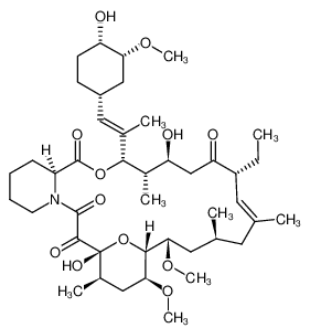
Ascomycin, also known as 12-deoxymethymycin or SCH-56592, is a potent macrolide immunosuppressive agent structurally related to tacrolimus (FK506). With the CAS number 84327-36-6 and molecular formula C46H71NO12, this compound belongs to the family of calcineurin inhibitors. Its primary mechanism of action involves binding to the intracellular protein FKBP-12, forming a complex that specifically inhibits calcineurin phosphatase activity. By blocking calcineurin, Ascomycin prevents the dephosphorylation of nuclear factor of activated T-cells (NFAT), thereby arresting the transcription of interleukin-2 and other cytokines essential for T-cell activation and proliferation.
Originally isolated from the bacterium *Streptomyces hygroscopicus*, Ascomycin exhibits immunosuppressive potency comparable to or exceeding that of cyclosporine A in various preclinical models. Due to its high efficacy and distinct pharmacological profile, it has been extensively investigated for the prevention of organ transplant rejection and the treatment of autoimmune disorders. Notably, Ascomycin serves as a critical research tool in immunology laboratories for studying signal transduction pathways within immune cells. While tacrolimus is the clinically approved derivative derived from this scaffold, Ascomycin remains vital for understanding structure-activity relationships in macrolide development.
In pharmaceutical research, Ascomycin is utilized to evaluate novel drug delivery systems and to assess toxicity profiles associated with calcineurin inhibition. It demonstrates strong antifungal properties alongside its immunomodulatory effects, though clinical applications focus primarily on its ability to suppress graft-versus-host disease and prevent acute rejection in kidney, liver, and heart transplantation scenarios. Despite being largely superseded by tacrolimus in commercial markets due to improved stability and bioavailability, Ascomycin continues to hold significant value in academic settings for elucidating the molecular basis of immune tolerance. Researchers utilize this compound to probe the intricacies of T-cell receptor signaling, making it an indispensable reagent in the ongoing quest for more effective and safer immunotherapies.



 (All Rights Reserved)


![8,16-Diazadispiro[6.1.6.2]heptadecan-17-one](https://eimg.pharmasources.com/image/product/20250403/ca91cba8b87e53fc879f8d8764873a40jpg)
![6,8-Dioxo-5,7-diazaspiro[3.4]octane-2-carboxylic acid](https://eimg.pharmasources.com/image/product/20250403/02effeb5a7639bc84ff1f3add3c0c64fjpg)
![8-Oxa-1,3-diazaspiro[4.5]decane-2,4-dione](https://eimg.pharmasources.com/image/product/20250403/60fa7223d5a34f24138486ceea0ffb15jpg)