Product Description
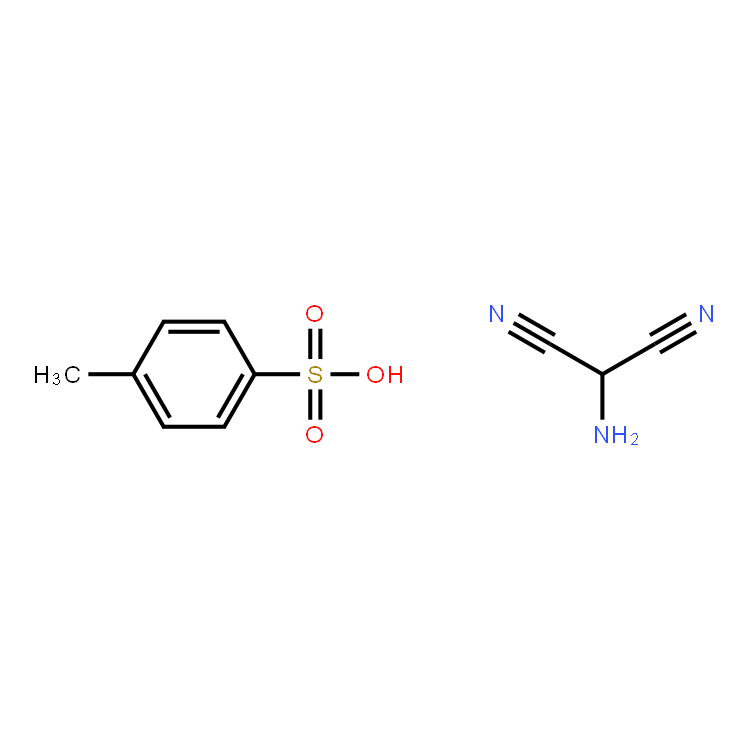
Aminomalononitrile p-toluenesulfonate、5098-14-6
AI Product Description
*The following content is generated by AI and is for reference only.
Aminomalononitrile p-toluenesulfonate is a specialized organic intermediate widely utilized in the synthesis of complex heterocyclic compounds, particularly within the pharmaceutical and agrochemical industries. This salt compound consists of aminomalononitrile paired with p-toluenesulfonic acid, offering enhanced stability and solubility compared to its free base form. The molecular formula for this substance is typically represented as C10H12N2O3S when considering the combined stoichiometry of the cation and anion components, though exact formulations may vary slightly depending on hydration states. Its corresponding CAS number is 6748-96-5, which serves as the unique identifier for regulatory compliance and inventory management across global chemical supply chains.
The primary utility of aminomalononitrile p-toluenesulfonate lies in its role as a versatile building block for constructing pyridine derivatives, thiazoles, and other nitrogen-containing rings essential for drug development. In synthetic chemistry, it facilitates multicomponent reactions such as the Hantzsch pyridine synthesis or the Gewald reaction, enabling efficient construction of molecular scaffolds under mild conditions. The presence of the p-toluenesulfonate counterion often improves the handling characteristics of the reagent, reducing hygroscopicity and preventing premature decomposition during storage or transport. This makes it highly suitable for large-scale industrial applications where consistency and safety are paramount.
Furthermore, researchers leverage this compound to synthesize intermediates for active pharmaceutical ingredients (APIs) targeting cardiovascular diseases, anti-inflammatory agents, and antimicrobial therapies. Its ability to introduce nitrile and amine functionalities simultaneously allows chemists to streamline multi-step synthesis pathways, thereby improving overall yield and reducing waste generation. As the demand for novel therapeutics grows, the importance of reliable, high-purity precursors like this salt continues to rise. Safety data sheets indicate that while the compound requires standard laboratory precautions due to potential toxicity upon ingestion or skin contact, proper handling ensures safe usage in controlled environments. Ultimately, aminomalononitrile p-toluenesulfonate remains a critical tool for modern organic synthesis, bridging the gap between basic chemical research and commercial production of life-saving medications.











 (All Rights Reserved)
![8-Oxa-1,3-diazaspiro[4.5]decane-2,4-dione](https://eimg.pharmasources.com/image/product/20250403/60fa7223d5a34f24138486ceea0ffb15jpg)
![6,8-Dioxo-5,7-diazaspiro[3.4]octane-2-carboxylic acid](https://eimg.pharmasources.com/image/product/20250403/02effeb5a7639bc84ff1f3add3c0c64fjpg)
![8,16-Diazadispiro[6.1.6.2]heptadecan-17-one](https://eimg.pharmasources.com/image/product/20250403/ca91cba8b87e53fc879f8d8764873a40jpg)