Product Description
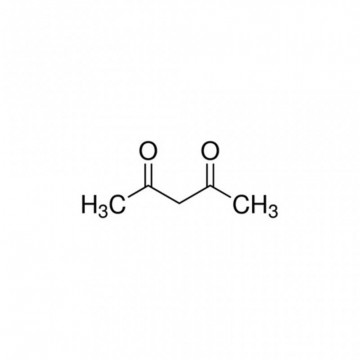
Acetoacetone
|
Assay,%
|
min 99.0
|
|
Density(20℃)g/ml
|
0.972~0.976
|
|
Solubility in water
|
passes test
|
|
Residue on ignition,%
|
max 0.005
|
|
Solubility in ethanol
|
passes test
|
Packing: 500ml
AI Product Description
*The following content is generated by AI and is for reference only.
Acetoacetone, chemically known as 3-oxobutanal or butane-2,3-dione, is a reactive organic compound belonging to the class of alpha-keto aldehydes. Its molecular formula is C4H6O2, and it is commonly identified by the CAS Registry Number 78-98-8. This substance exists as a yellowish liquid with a distinct odor and exhibits high reactivity due to the presence of both ketone and aldehyde functional groups within its structure. The molecule is inherently unstable under standard conditions, often prone to polymerization or rapid oxidation, which necessitates careful handling and storage in cool, dry environments away from incompatible materials.
In industrial applications, acetoacetone serves primarily as a specialized intermediate in organic synthesis rather than a bulk commodity chemical. It is frequently utilized in the pharmaceutical industry for the production of heterocyclic compounds, including pyrazoles and imidazoles, which are key structural motifs in various drug candidates. Furthermore, it plays a significant role in the synthesis of agrochemicals, acting as a precursor for herbicides and fungicides designed to enhance crop protection. In materials science, this compound contributes to the development of advanced polymers and resins, offering unique cross-linking capabilities that improve thermal stability and mechanical strength.
Despite its utility, the handling of acetoacetone requires strict adherence to safety protocols. Due to its instability and potential to cause skin irritation or respiratory issues, appropriate personal protective equipment is mandatory during processing. Regulatory bodies classify it as a hazardous substance, requiring specific labeling and containment measures to prevent environmental release. While not widely available in general commercial catalogs compared to simpler solvents, it remains an essential building block for research laboratories and specialized manufacturing sectors focused on fine chemicals. Ongoing studies continue to explore its potential in novel catalytic processes and green chemistry initiatives, aiming to maximize efficiency while minimizing waste generation in complex synthetic pathways.



 (All Rights Reserved)