Product Description
Acetoacetone
|
Assay,%
|
min 99.0
|
|
Density(20℃)g/ml
|
0.972~0.976
|
|
Solubility in water
|
passes test
|
|
Residue on ignition,%
|
max 0.005
|
|
Solubility in ethanol
|
passes test
|
Packing: 500ml
AI Product Description
*The following content is generated by AI and is for reference only.
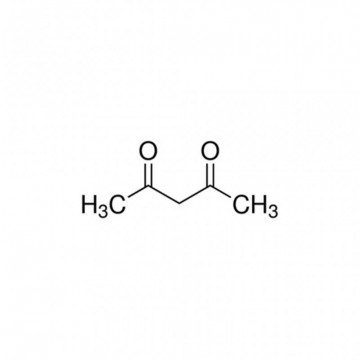
Acetoacetone, chemically known as 2,4-pentanedione or acetylacetone, is a versatile organic compound with the molecular formula C5H8O2 and the CAS Registry Number 123-54-6. This clear, colorless liquid possesses a characteristic sweet, fruity odor and is highly soluble in water, ethanol, and ether. Its unique chemical structure features a beta-diketone moiety that exists in equilibrium between keto and enol tautomers, a property that significantly enhances its reactivity and utility across various industrial and laboratory applications.
In the field of coordination chemistry, acetoacetone serves as a crucial ligand for forming stable metal chelates. These complexes are widely utilized in catalysis, particularly in oxidation reactions and polymerization processes, where they act as efficient catalysts or stabilizers. The ability of acetoacetone to bind with transition metals like copper, iron, and aluminum makes it indispensable in the production of specialized dyes, pigments, and corrosion inhibitors. Furthermore, it plays a pivotal role in the synthesis of heterocyclic compounds, including pyrazoles, pyridines, and thiazoles, which are fundamental building blocks for pharmaceuticals and agrochemicals.
Beyond its synthetic applications, acetoacetone is employed as an intermediate in the manufacturing of resins, plastics, and rubber additives. It contributes to the development of high-performance materials by improving thermal stability and mechanical strength. In analytical chemistry, it is frequently used as a reagent for detecting specific metal ions due to its distinct color changes upon complexation. Additionally, the compound finds use in the fragrance industry, where its olfactory properties are leveraged to create unique scent profiles. Despite its widespread utility, handling requires caution as it can be irritating to the skin and eyes. Overall, acetoacetone remains a cornerstone chemical in modern organic synthesis and industrial manufacturing, bridging the gap between basic research and large-scale commercial production through its exceptional versatility and reactivity.



 (All Rights Reserved)