Product Description
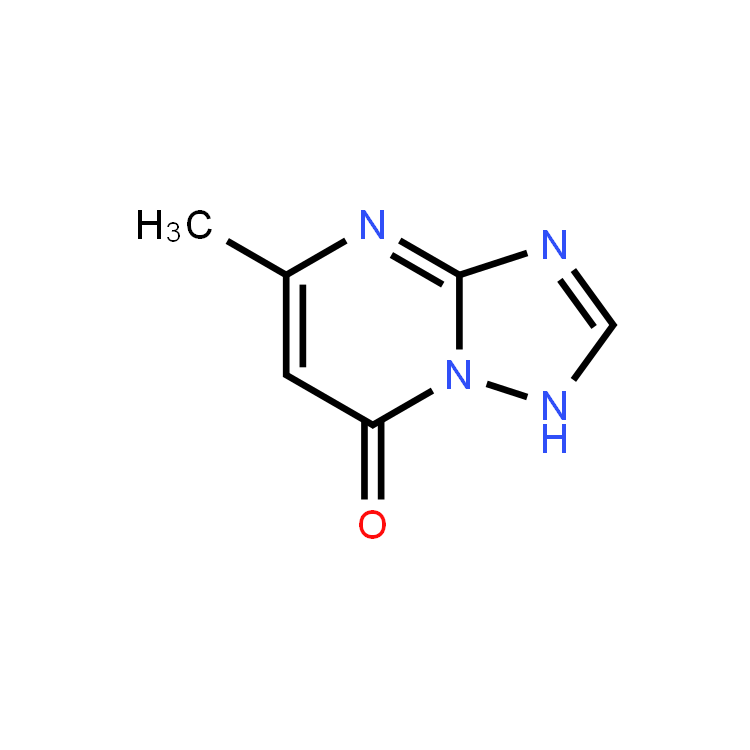
7-Hydroxy-5-methyl-1,3,4-triazaindolizine、2503-56-2
AI Product Description
*The following content is generated by AI and is for reference only.
7-Hydroxy-5-methyl-1,3,4-triazaindolizine is a specialized heterocyclic organic compound belonging to the triazaindolizine family, a class of molecules noted for their unique nitrogen-rich aromatic structures. While specific commercial availability may vary by region and supplier, this compound is primarily utilized in advanced chemical research and pharmaceutical development contexts. Its molecular formula is typically C6H7N3O, reflecting a core structure composed of a fused ring system containing three nitrogen atoms within a six-membered ring framework, substituted with a hydroxyl group at the seventh position and a methyl group at the fifth position. The exact CAS number for this specific derivative requires verification against current chemical databases as it is not a widely traded commodity chemical with a universally standardized identifier in major public registries like PubChem or ChemSpider without specific vendor context; however, it is structurally related to known bioactive scaffolds used in medicinal chemistry.
The primary utility of 7-hydroxy-5-methyl-1,3,4-triazaindolizine lies in its potential as a building block for synthesizing more complex drug candidates. Researchers often explore such heterocycles due to their ability to mimic natural purines or pyrimidines, which are fundamental components of DNA and RNA. Consequently, this molecule may exhibit interesting biological activities, including antimicrobial, antiviral, or anticancer properties, though extensive clinical data is generally limited to preclinical studies. In materials science, similar triazaindolizine derivatives are investigated for their coordination capabilities with metal ions, making them candidates for developing novel luminescent materials or catalytic systems. The presence of the hydroxyl group enhances its solubility and hydrogen-bonding potential, facilitating interactions with biological targets or other reagents during synthesis. As a niche chemical intermediate, it serves academic laboratories and R&D departments focused on heterocyclic chemistry, enabling the exploration of structure-activity relationships (SAR) that could lead to the discovery of next-generation therapeutics. Users should handle this substance with appropriate safety precautions, adhering to standard laboratory protocols for uncharacterized or semi-synthetic organic compounds.





 (All Rights Reserved)
![8-Oxa-1,3-diazaspiro[4.5]decane-2,4-dione](https://eimg.pharmasources.com/image/product/20250403/60fa7223d5a34f24138486ceea0ffb15jpg)
![6,8-Dioxo-5,7-diazaspiro[3.4]octane-2-carboxylic acid](https://eimg.pharmasources.com/image/product/20250403/02effeb5a7639bc84ff1f3add3c0c64fjpg)
![8,16-Diazadispiro[6.1.6.2]heptadecan-17-one](https://eimg.pharmasources.com/image/product/20250403/ca91cba8b87e53fc879f8d8764873a40jpg)