*The following content is generated by AI and is for reference only.
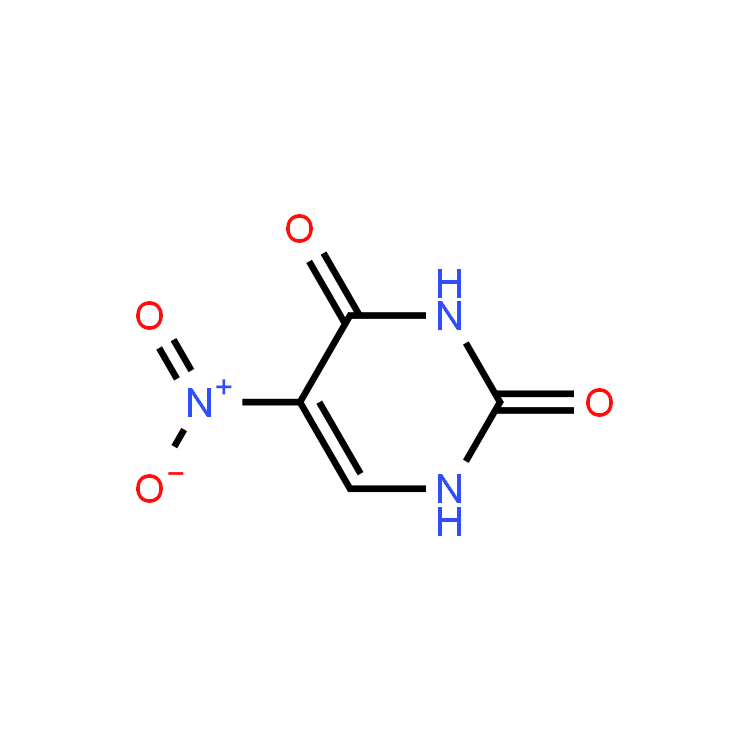
5-Nitrouracil, chemically known as 5-nitro-1H-pyrimidine-2,4-dione, is a specialized organic intermediate widely utilized in the fields of pharmaceutical research and heterocyclic chemistry. With the molecular formula C4H3N3O4 and a molecular weight of approximately 157.09 g/mol, this compound features a pyrimidine ring substituted with a nitro group at the fifth position. Its standard CAS Registry Number is 56-83-1, serving as a unique identifier for inventory management and safety data compliance across global supply chains.
The primary utility of 5-Nitrouracil lies in its role as a critical precursor for synthesizing biologically active compounds. It serves as an essential building block in the development of antiviral agents, particularly those targeting retroviruses and hepatitis viruses. The nitro group attached to the uracil scaffold offers high reactivity, allowing chemists to perform various reduction, alkylation, or substitution reactions to create complex nucleoside analogs. These analogs often exhibit potent inhibitory effects against viral replication mechanisms, making them valuable candidates for drug discovery programs. Furthermore, derivatives synthesized from this starting material have shown promise in anticancer research due to their ability to interfere with DNA synthesis in rapidly dividing cells.
In industrial applications, 5-Nitrouracil is employed in the production of specific agrochemicals and dyes, although its pharmaceutical usage remains dominant. The compound typically appears as a pale yellow to off-white crystalline powder, which is slightly soluble in hot water but more soluble in alkaline solutions where it forms stable salts. Safety protocols require careful handling due to potential irritant properties and environmental sensitivity; proper storage in cool, dry conditions away from strong reducing agents is mandatory to maintain stability. Researchers frequently utilize spectroscopic techniques such as NMR and mass spectrometry to verify purity before incorporating it into multi-step synthetic pathways. As the demand for novel nucleic acid-based therapeutics grows, 5-Nitrouracil continues to be a vital component in the toolkit of medicinal chemists aiming to design next-generation treatments for infectious diseases and malignancies. Its structural versatility ensures its enduring relevance in modern chemical synthesis laboratories worldwide.