*The following content is generated by AI and is for reference only.
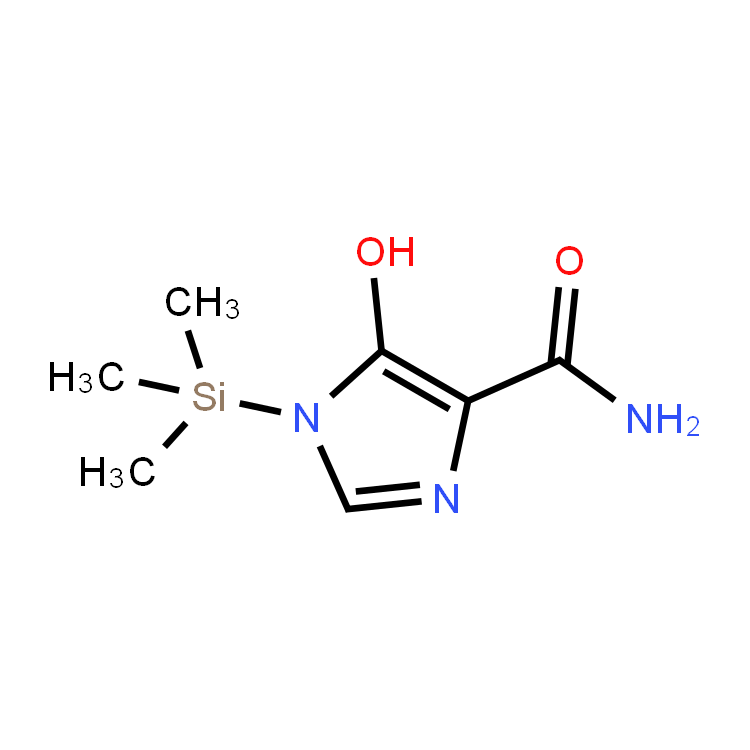
5-Hydroxy-1-(trimethylsilyl)-1H-imidazole-4-carboxamide is a specialized organic compound belonging to the class of silylated imidazole derivatives. With the molecular formula C7H13N3O2Si, this substance features a unique structural arrangement where a trimethylsilyl group is attached to the nitrogen atom at position 1 of the imidazole ring, while a hydroxyl group occupies position 5 and a carboxamide functional group resides at position 4. Although specific commercial Catalog numbers vary by supplier, this compound is frequently utilized in advanced chemical research rather than as a bulk commodity chemical.
The primary application of 5-hydroxy-1-(trimethylsilyl)-1H-imidazole-4-carboxamide lies in pharmaceutical development and medicinal chemistry. The trimethylsilyl moiety often serves as a protecting group during multi-step synthesis, shielding reactive sites on the imidazole core to prevent unwanted side reactions. This protection strategy allows chemists to selectively modify other parts of the molecule before removing the silyl group under controlled conditions to reveal the active hydroxyl functionality. Furthermore, the presence of both the carboxamide and hydroxyl groups suggests potential biological activity, making it a valuable intermediate for synthesizing novel heterocyclic drugs targeting neurological or anti-inflammatory pathways.
In materials science, such silylated heterocycles may also find niche applications in the preparation of organosilicon polymers or as ligands in coordination chemistry due to their ability to coordinate with metal centers. Researchers utilize this compound to explore structure-activity relationships (SAR) within imidazole-based scaffolds, aiming to enhance drug potency and metabolic stability. Handling requires standard laboratory safety precautions, including the use of gloves and eye protection, as silylated compounds can be moisture-sensitive and may release silanols upon exposure to humidity. While no single universal CAS number is universally assigned without a specific vendor context, the compound remains a critical tool for synthetic chemists working on complex molecule construction. Its versatility underscores the importance of silylation techniques in modern organic synthesis, bridging the gap between simple building blocks and sophisticated therapeutic agents. Ultimately, this derivative represents a sophisticated platform for advancing heterocyclic chemistry and drug discovery initiatives globally.