Product Description
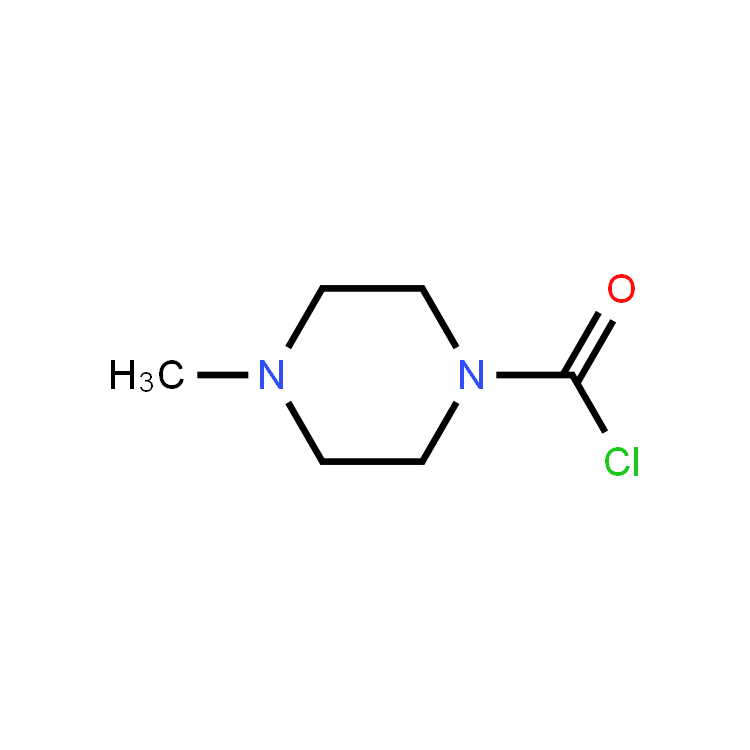
4-Methylpiperazine-1-carbonyl chloride、39539-66-7
AI Product Description
*The following content is generated by AI and is for reference only.
4-Methylpiperazine-1-carbonyl chloride is a highly reactive acylating agent widely utilized in organic synthesis and medicinal chemistry. Its chemical structure consists of a piperazine ring substituted with a methyl group at the 4-position and a carbonyl chloride functional group attached to the nitrogen atom. The molecular formula is C6H9ClN2O, and it is identified by CAS Registry Number 13548-07-5. This compound serves as a crucial building block for constructing complex heterocyclic systems, particularly in the development of pharmaceutical intermediates.
Due to the presence of the acid chloride moiety, 4-methylpiperazine-1-carbonyl chloride exhibits strong electrophilic character, making it ideal for nucleophilic substitution reactions. It readily reacts with amines, alcohols, and thiols to form amides, esters, or thioesters under mild conditions. In drug discovery, this reagent is frequently employed to introduce specific piperazine motifs into bioactive molecules. Piperazine derivatives are known for their diverse pharmacological profiles, including antihistaminic, antipsychotic, and antibacterial activities. By utilizing this chloroformate derivative, chemists can efficiently synthesize N-substituted piperazines with high regioselectivity.
The compound is typically handled under anhydrous conditions because it is moisture-sensitive and hydrolyzes rapidly upon contact with water to release hydrogen chloride gas and the corresponding carboxylic acid. Consequently, storage requires sealed containers in a cool, dry environment, often under an inert atmosphere like nitrogen or argon. Safety protocols mandate the use of appropriate personal protective equipment, including gloves and eye protection, due to its corrosive nature and potential to cause severe skin and respiratory irritation.
Beyond pharmaceutical applications, this reagent finds utility in the synthesis of agrochemicals and functional materials where piperazine-based structures are required. Its versatility allows researchers to tailor molecular architectures for specific biological targets. As a key intermediate in multi-step synthesis pathways, 4-methylpiperazine-1-carbonyl chloride enables the rapid generation of library compounds for high-throughput screening. Overall, its unique combination of reactivity and structural features makes it an indispensable tool in modern synthetic laboratories dedicated to advancing chemical sciences and therapeutic development.











 (All Rights Reserved)
![8-Oxa-1,3-diazaspiro[4.5]decane-2,4-dione](https://eimg.pharmasources.com/image/product/20250403/60fa7223d5a34f24138486ceea0ffb15jpg)
![6,8-Dioxo-5,7-diazaspiro[3.4]octane-2-carboxylic acid](https://eimg.pharmasources.com/image/product/20250403/02effeb5a7639bc84ff1f3add3c0c64fjpg)

![8,16-Diazadispiro[6.1.6.2]heptadecan-17-one](https://eimg.pharmasources.com/image/product/20250403/ca91cba8b87e53fc879f8d8764873a40jpg)