Product Description
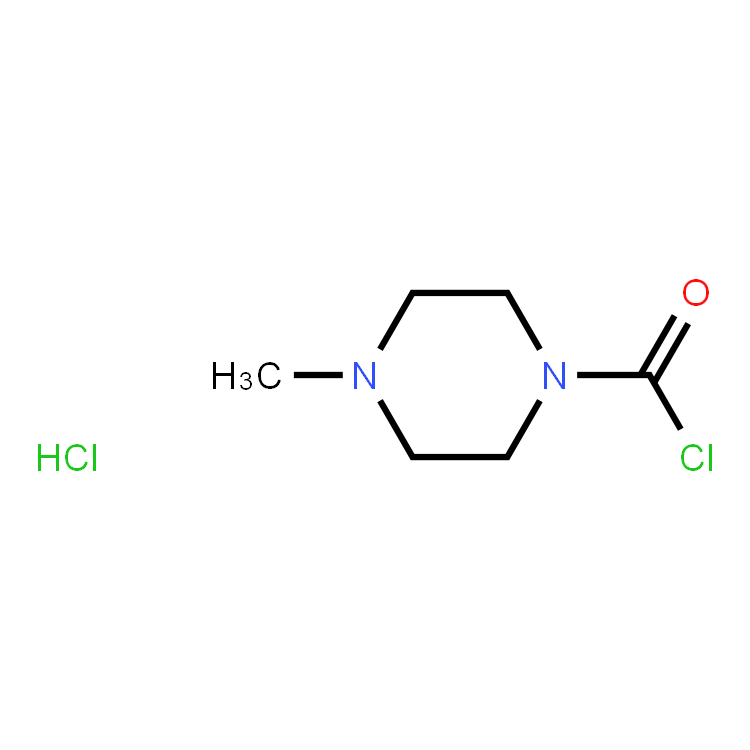
4-Methyl-1-piperazinecarbonyl chloride hydrochloride、55112-42-0
AI Product Description
*The following content is generated by AI and is for reference only.
4-Methyl-1-piperazinecarbonyl chloride hydrochloride is a specialized chemical reagent widely utilized in organic synthesis and pharmaceutical development. With the CAS number 106923-78-2, this compound serves as a crucial intermediate for constructing complex heterocyclic structures. Its molecular formula is C6H10ClN3O, reflecting its composition of carbon, hydrogen, chlorine, nitrogen, and oxygen atoms in a specific arrangement that defines its reactive properties. The substance exists as a hydrochloride salt, which enhances its stability and solubility in aqueous media compared to its free base form, making it easier to handle during laboratory procedures.
The primary application of 4-methyl-1-piperazinecarbonyl chloride hydrochloride lies in the preparation of piperazine-based derivatives, which are fundamental building blocks for numerous bioactive molecules. Chemists frequently employ this reagent to introduce a carbamoyl group onto amine substrates, facilitating the formation of urea linkages or amide bonds essential for drug design. In the pharmaceutical industry, piperazine rings are common scaffolds found in antihistamines, antipsychotics, and antidepressants. By utilizing this specific acylating agent, researchers can efficiently synthesize novel compounds with optimized pharmacological profiles.
Furthermore, this reagent is valuable in material science for creating functional polymers and ligands used in catalysis. The presence of the methyl substituent on the piperazine ring introduces steric and electronic effects that can fine-tune the reactivity of the final product, allowing for precise control over reaction pathways. Due to its high purity and consistent quality, it is favored by academic institutions and industrial laboratories conducting structure-activity relationship (SAR) studies. Safety protocols must be observed when handling this compound, as acyl chlorides can be corrosive and release hydrochloric acid upon contact with moisture. Proper storage in a cool, dry environment under an inert atmosphere is recommended to maintain its integrity. Overall, 4-methyl-1-piperazinecarbonyl chloride hydrochloride remains an indispensable tool for advancing medicinal chemistry and developing next-generation therapeutic agents.











 (All Rights Reserved)
![8-Oxa-1,3-diazaspiro[4.5]decane-2,4-dione](https://eimg.pharmasources.com/image/product/20250403/60fa7223d5a34f24138486ceea0ffb15jpg)
![6,8-Dioxo-5,7-diazaspiro[3.4]octane-2-carboxylic acid](https://eimg.pharmasources.com/image/product/20250403/02effeb5a7639bc84ff1f3add3c0c64fjpg)


![8,16-Diazadispiro[6.1.6.2]heptadecan-17-one](https://eimg.pharmasources.com/image/product/20250403/ca91cba8b87e53fc879f8d8764873a40jpg)