Product Description
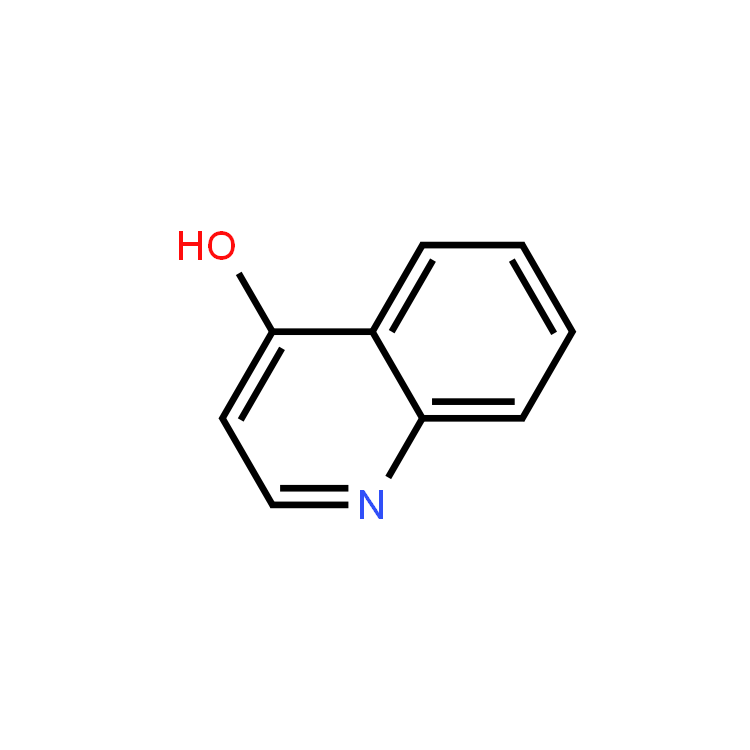
4-Hydroxyquinoline、611-36-9
AI Product Description
*The following content is generated by AI and is for reference only.
4-Hydroxyquinoline, also known as 8-hydroxyquinoline in some contexts though strictly referring to the 4-isomer, is a versatile heterocyclic compound widely utilized in organic synthesis and industrial applications. Its molecular formula is C9H7NO, and it carries the CAS Registry Number 615-32-9. This white to pale yellow crystalline powder exhibits moderate solubility in hot water and ethanol but dissolves readily in dilute alkali solutions due to its acidic hydroxyl group. The molecule features a quinoline core with a hydroxyl substituent at the fourth position, which significantly enhances its chelating ability compared to simple phenols.
The primary application of 4-hydroxyquinoline lies in its role as a key intermediate for synthesizing pharmaceuticals, agrochemicals, and dyes. In the pharmaceutical sector, derivatives of this compound are investigated for their antimicrobial, antifungal, and anti-inflammatory properties. It serves as a crucial building block for developing novel therapeutic agents targeting various diseases. Furthermore, in analytical chemistry, it acts as an effective ligand for metal ion detection and separation processes. Its ability to form stable complexes with transition metals makes it valuable in coordination chemistry research and catalysis.
In the agricultural industry, compounds derived from 4-hydroxyquinoline are explored as fungicides and preservatives to protect crops and extend the shelf life of organic materials. Additionally, it finds use in the production of fluorescent probes and sensors due to its unique photophysical properties. The compound is also employed in the manufacturing of corrosion inhibitors for metals, protecting machinery and infrastructure from oxidative damage. Despite its utility, handling requires standard safety precautions, including the use of personal protective equipment, as it may cause skin irritation. Overall, 4-hydroxyquinoline remains a significant chemical entity bridging fundamental research and practical industrial solutions, contributing to advancements in medicine, agriculture, and materials science through its diverse reactivity and complexation capabilities.











 (All Rights Reserved)
![8-Oxa-1,3-diazaspiro[4.5]decane-2,4-dione](https://eimg.pharmasources.com/image/product/20250403/60fa7223d5a34f24138486ceea0ffb15jpg)
![6,8-Dioxo-5,7-diazaspiro[3.4]octane-2-carboxylic acid](https://eimg.pharmasources.com/image/product/20250403/02effeb5a7639bc84ff1f3add3c0c64fjpg)
![8,16-Diazadispiro[6.1.6.2]heptadecan-17-one](https://eimg.pharmasources.com/image/product/20250403/ca91cba8b87e53fc879f8d8764873a40jpg)