Product Description
4-Fluorobenzaldehyde、459-57-4
AI Product Description
*The following content is generated by AI and is for reference only.
4-Fluorobenzaldehyde is a versatile organic compound widely utilized in the pharmaceutical, agrochemical, and materials science industries. With the chemical formula C7H5FO and a CAS registry number of 462-90-8, this white to off-white crystalline solid serves as a crucial building block for synthesizing complex molecular structures. Its distinct chemical properties stem from the presence of both an aldehyde group and a fluorine atom attached to the benzene ring at the para position, making it highly reactive toward nucleophiles and electrophiles alike.
In the pharmaceutical sector, 4-fluorobenzaldehyde is extensively employed as an intermediate in the synthesis of various active pharmaceutical ingredients (APIs). The introduction of the fluorine atom often enhances the metabolic stability, lipophilicity, and binding affinity of drug candidates, thereby improving their therapeutic efficacy. It is particularly valuable in the production of anti-inflammatory agents, antihistamines, and cardiovascular drugs where precise structural modifications are required to optimize biological activity. Researchers frequently utilize its reactivity in condensation reactions, such as the Knoevenagel condensation or Wittig reaction, to construct carbon-carbon double bonds essential for drug scaffolds.
Beyond medicine, this compound plays a significant role in the development of agrochemicals, including herbicides and fungicides. The fluorinated aromatic structure contributes to the durability and potency of these agricultural products against pests and pathogens. Additionally, in the field of material science, 4-fluorobenzaldehyde acts as a precursor for liquid crystals and advanced polymers. Its ability to form stable mesogenic phases makes it suitable for manufacturing display technologies with high response times and optical clarity. Furthermore, it is used in the synthesis of fluorescent probes and sensors due to its unique electronic characteristics.
The compound is generally handled under standard laboratory safety protocols, requiring protection from moisture and light to maintain stability. While it presents typical hazards associated with aldehydes, such as skin irritation and potential respiratory sensitization, proper containment ensures safe usage in industrial and research settings. As a cost-effective and readily available reagent, 4-fluorobenzaldehyde remains a staple in modern organic synthesis, facilitating the creation of innovative molecules that address critical needs in healthcare and technology. Its continued demand underscores its importance in advancing chemical innovation across multiple disciplines globally.

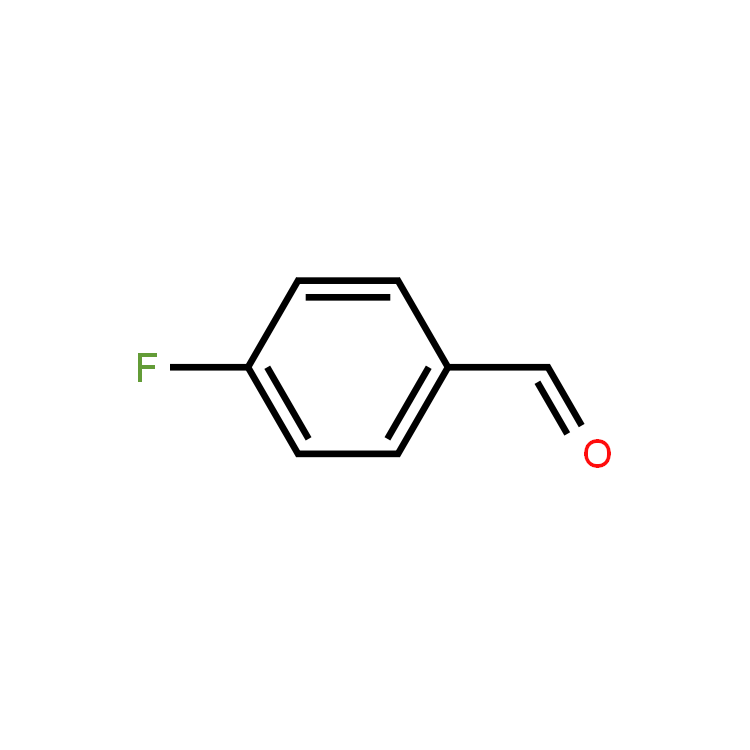




 (All Rights Reserved)
![8-Oxa-1,3-diazaspiro[4.5]decane-2,4-dione](https://eimg.pharmasources.com/image/product/20250403/60fa7223d5a34f24138486ceea0ffb15jpg)
![6,8-Dioxo-5,7-diazaspiro[3.4]octane-2-carboxylic acid](https://eimg.pharmasources.com/image/product/20250403/02effeb5a7639bc84ff1f3add3c0c64fjpg)
![8,16-Diazadispiro[6.1.6.2]heptadecan-17-one](https://eimg.pharmasources.com/image/product/20250403/ca91cba8b87e53fc879f8d8764873a40jpg)